
HomeCategory

Zero-Dose Learning Hub

This report evaluates strategies implemented between March 2024 and August 2025 to reach zero-dose (ZD) children in Uganda’s Wakiso, Kasese, and Mubende districts. While the general ZD burden in study communities dropped from 12.7% to 6.5%, progress was primarily driven by routine immunisation rather than targeted campaigns. Key findings include:
• Persistent Barriers: Vaccine stockouts, long wait times, poor data quality, and geographic isolation hinder identification and vaccination.
• Social Drivers: Restrictive gender norms, poverty, and religious beliefs continue to disconnect families from available services.
• Effectiveness: Only 9.3% of baseline ZD children were reached during the intervention period. However, interpersonal communication, home visits, and spousal support showed significant promise in building trust.
• Costing: Identifying a ZD child averages US$3.07, while vaccinating one costs approximately US$14, with costs rising in hard-to-reach areas.
Meaningful progress requires shifting from uniform, centrally designed approaches to strategies grounded in community realities. Future success depends on stronger governance, improved data systems, and active community engagement at every stage of service delivery.

Click the link below to read the full report and explore the findings and recommendations in detail.
Identifying and Reaching Zero-Dose Children in Uganda: Implementation, Effectiveness, and Costs of Targeted Interventions


This report from the Uganda Zero-Dose Learning Hub presents findings from a costing study conducted during the 2024 Big Catch-Up campaign. It estimates the incremental costs of identifying and reaching zero-dose and under-immunised children through house-to-house registration and targeted outreaches in three high-burden districts. Results highlight unit costs per child identified and vaccinated, cost drivers, and district variations, offering evidence to guide future planning, budgeting, and sustainability of immunisation strategies in resource-constrained settings.

Click the link below to read the full report and explore the findings and recommendations in detail.

The Cost of Identifying and Reaching Zero-Dose Children in Uganda: A Case Study of House-to-House Registration and Targeted Immunization Outreaches


The Uganda Learning Hub conducted an in-depth analysis of the country’s immunisation data ecosystem to assess the utility of existing platforms in identifying and monitoring zero-dose (ZD) and under-immunised (UI) children. While the DHIS2 remains the primary tool for data capture, its inability to collect individual-level data limits its effectiveness in characterising ZD children. Emerging platforms such as Smart-Paper Technology (SPT) and the electronic Community Health Information System (eCHIS) offer promising features, such as unique identifiers and household-level data collection, but face challenges with integration, coverage, and sustainability. Findings highlight significant discrepancies in ZD and UI estimates across systems, driven by variations in data quality, sources, and denominators. To improve the accuracy of ZD identification and immunisation tracking, the study recommends deploying a functional digital system at the community level, enhancing data triangulation, and integrating immunisation tracking with civil registration systems. These steps are critical to ensuring no child is left behind in Uganda’s immunisation efforts.

Click the link below to read the full report, and explore the findings and recommendations in detail.

Utility of Data Capture Platforms for Identifying Zero-Dose Children in Uganda


Despite Uganda’s progress in achieving an average immunisation coverage of 90%, significant gaps remain in reaching zero-dose (ZD) and under-immunised (UI) children. A 2024 study by the Uganda Learning Hub focused on three high-risk communities in Mubende district to estimate the prevalence of ZD and UI children, understand barriers to immunisation, and provide actionable solutions. The study revealed that 12.7% of children in these communities were ZD, with many born outside health facilities or cared for by non-biological guardians. Key barriers included negative attitudes among health workers, caregiver knowledge gaps, cultural resistance, fear of side effects, and logistical challenges, such as distance to health facilities. The findings emphasise the importance of targeted outreach, improving health worker attitudes, caregiver education, and strengthening health infrastructure and data systems to close the immunisation gap and ensure no child is left behind.

Click the link below and read the full report and explore the findings and recommendations in detail.

Burden of Zero-Dose Children in Pastoralist, Hard-to-Reach and Underserved Communities: A Case Study of Mubende District, Uganda


With support from the ELMA Vaccines and Immunisation Foundation, UNICEF has been working to strengthen Uganda’s Expanded Program on Immunisation to better identify and reach zero-dose (ZD) and under-immunised (UI) children. In 2023, interventions were prioritised in the districts of Wakiso, Kamuli, Kampala, and Mukono.

This report, developed by the Uganda Learning Hub, evaluates progress toward UNICEF’s objective to strengthen microplanning as a follow-up system for identifying and immunising ZD and UI children in urban and high-density areas. Specifically, it assesses UNICEF’s support for Village Health Teams to register children, track their immunisation status, and conduct defaulter tracing in Kamuli and Wakiso districts.

The findings are intended to inform the scale-up of ZD interventions to additional districts, guide implementation under the Equity Accelerator Fund, and support the development of Uganda’s national ZD guidelines.

Click the link below to read the full report and explore the findings and recommendations in detail.

Identifying the Zero-Dose Child: Insights from the UNICEF-Supported House-to-House Registration of Children by Village Health Teams in Uganda


The Uganda National Expanded Program on Immunisation (UNEPI) has made great strides in improving immunisation coverage over the last 20 years. Despite these efforts, challenges in reaching every child with vaccines remain. These challenges are illustrated by the observed increase in the number of zero-dose children (ZDC). To characterise and understand the challenges of reaching the ZDC, under-immunised children, and missed communities, the Uganda Learning Hub for Immunisation Equity conducted a rapid assessment in three districts with a high burden of ZDC in Uganda (Wakiso, Mubende, and Kasese) between August 2023 and March 2024

Click the link below to read the full report and explore the findings and recommendations in detail.

Report on a Rapid Assessment of the Zero-Dose Situation in Uganda

Despite improvements in vaccination coverage in Uganda, immunisation gaps remain and require innovative strategies to bridge them and address vaccine inequities. Uganda’s diverse in-country settings contribute to variability in the drivers of zero-dose children (ZDC), under-immunised children (UIC), and missed communities. These drivers are complex, interrelated, and context-specific.
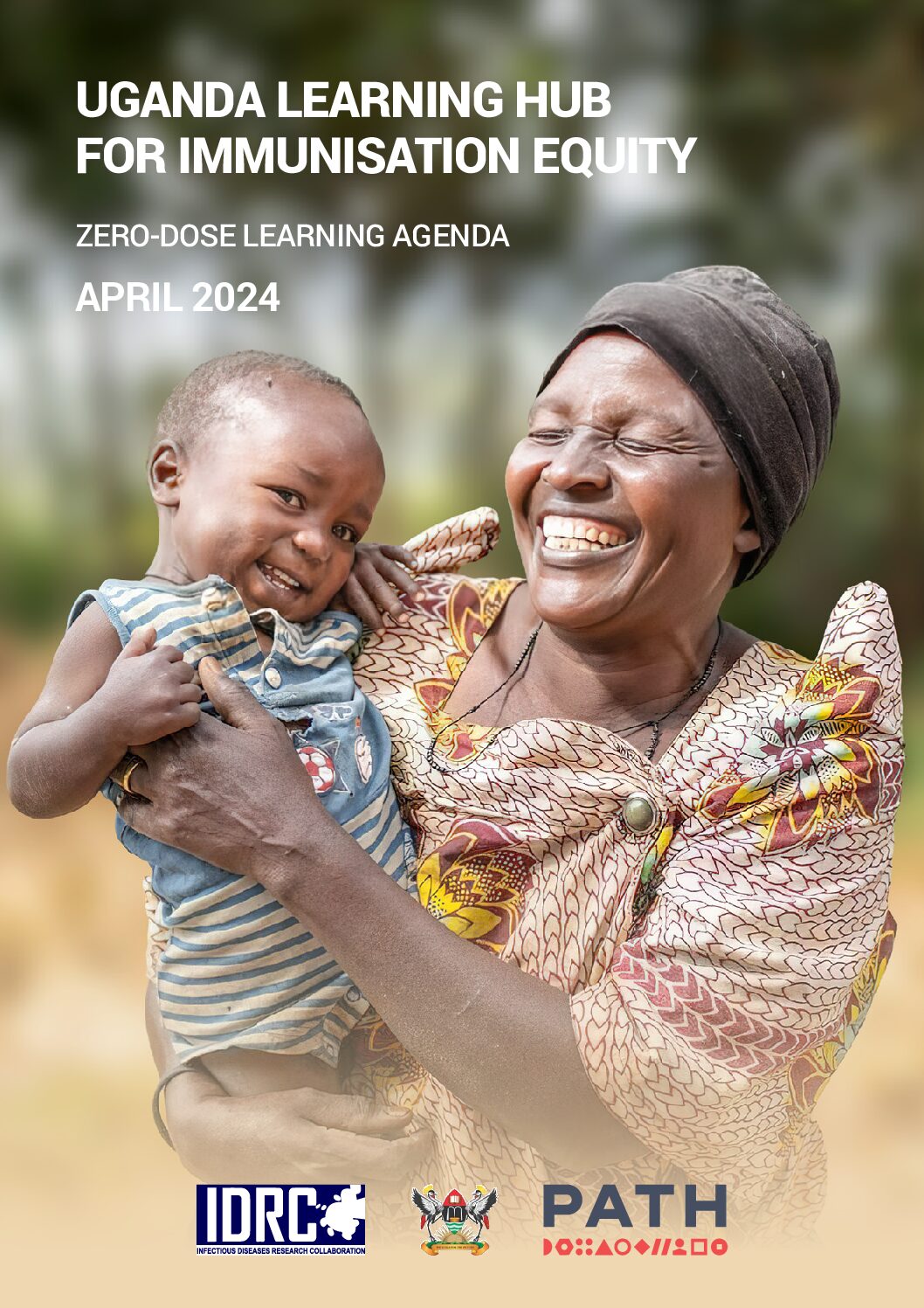
The Uganda Learning Hub for Immunisation Equity –composed of the Infectious Diseases Research Collaboration, PATH in Uganda, and Makerere University School of Public Health–developed an overarching learning agenda that describes learning questions, methods, and approaches using ongoing work on ZDC and UIC identification performed by the Uganda Ministry of Health and immunisation partners. This learning agenda serves as a platform for understanding perspectives on equity in immunisation in Uganda.

Click the link below to read the full report and explore the findings and recommendations in detail.

Uganda Learning Hub for immunisation equity – Zero-Dose Learning Agenda

Avantage
Headquarters
Visualize quality intellectual capital without superior collaboration and idea sharing installed base portals.
Our locations
Where to find us?
https://www.idrc-uganda.org/wp-content/uploads/2020/04/img-footer-map.png
Get in touch
Avantage Social links
Taking seamless key performance indicators offline to maximise the long tail.
Avantage
Headquarters
Visualize quality intellectual capital without superior collaboration and idea sharing installed base portals.
Our locations
Where to find us?
https://www.idrc-uganda.org/wp-content/uploads/2020/04/img-footer-map.png
Get in touch
Avantage Social links
Taking seamless key performance indicators offline to maximise the long tail.