HomeProject

Project

This report evaluates strategies implemented between March 2024 and August 2025 to reach zero-dose (ZD) children in Uganda’s Wakiso, Kasese, and Mubende districts. While the general ZD burden in study communities dropped from 12.7% to 6.5%, progress was primarily driven by routine immunisation rather than targeted campaigns. Key findings include:
• Persistent Barriers: Vaccine stockouts, long wait times, poor data quality, and geographic isolation hinder identification and vaccination.
• Social Drivers: Restrictive gender norms, poverty, and religious beliefs continue to disconnect families from available services.
• Effectiveness: Only 9.3% of baseline ZD children were reached during the intervention period. However, interpersonal communication, home visits, and spousal support showed significant promise in building trust.
• Costing: Identifying a ZD child averages US$3.07, while vaccinating one costs approximately US$14, with costs rising in hard-to-reach areas.
Meaningful progress requires shifting from uniform, centrally designed approaches to strategies grounded in community realities. Future success depends on stronger governance, improved data systems, and active community engagement at every stage of service delivery.

Click the link below to read the full report and explore the findings and recommendations in detail.

Identifying and Reaching Zero-Dose Children in Uganda: Implementation, Effectiveness, and Costs of Targeted Interventions


This report from the Uganda Zero-Dose Learning Hub presents findings from a costing study conducted during the 2024 Big Catch-Up campaign. It estimates the incremental costs of identifying and reaching zero-dose and under-immunised children through house-to-house registration and targeted outreaches in three high-burden districts. Results highlight unit costs per child identified and vaccinated, cost drivers, and district variations, offering evidence to guide future planning, budgeting, and sustainability of immunisation strategies in resource-constrained settings.

Click the link below to read the full report and explore the findings and recommendations in detail.

The Cost of Identifying and Reaching Zero-Dose Children in Uganda: A Case Study of House-to-House Registration and Targeted Immunization Outreaches


The Uganda Learning Hub conducted an in-depth analysis of the country’s immunisation data ecosystem to assess the utility of existing platforms in identifying and monitoring zero-dose (ZD) and under-immunised (UI) children. While the DHIS2 remains the primary tool for data capture, its inability to collect individual-level data limits its effectiveness in characterising ZD children. Emerging platforms such as Smart-Paper Technology (SPT) and the electronic Community Health Information System (eCHIS) offer promising features, such as unique identifiers and household-level data collection, but face challenges with integration, coverage, and sustainability. Findings highlight significant discrepancies in ZD and UI estimates across systems, driven by variations in data quality, sources, and denominators. To improve the accuracy of ZD identification and immunisation tracking, the study recommends deploying a functional digital system at the community level, enhancing data triangulation, and integrating immunisation tracking with civil registration systems. These steps are critical to ensuring no child is left behind in Uganda’s immunisation efforts.

Click the link below to read the full report, and explore the findings and recommendations in detail.

Utility of Data Capture Platforms for Identifying Zero-Dose Children in Uganda


Despite Uganda’s progress in achieving an average immunisation coverage of 90%, significant gaps remain in reaching zero-dose (ZD) and under-immunised (UI) children. A 2024 study by the Uganda Learning Hub focused on three high-risk communities in Mubende district to estimate the prevalence of ZD and UI children, understand barriers to immunisation, and provide actionable solutions. The study revealed that 12.7% of children in these communities were ZD, with many born outside health facilities or cared for by non-biological guardians. Key barriers included negative attitudes among health workers, caregiver knowledge gaps, cultural resistance, fear of side effects, and logistical challenges, such as distance to health facilities. The findings emphasise the importance of targeted outreach, improving health worker attitudes, caregiver education, and strengthening health infrastructure and data systems to close the immunisation gap and ensure no child is left behind.

Click the link below and read the full report and explore the findings and recommendations in detail.

Burden of Zero-Dose Children in Pastoralist, Hard-to-Reach and Underserved Communities: A Case Study of Mubende District, Uganda


With support from the ELMA Vaccines and Immunisation Foundation, UNICEF has been working to strengthen Uganda’s Expanded Program on Immunisation to better identify and reach zero-dose (ZD) and under-immunised (UI) children. In 2023, interventions were prioritised in the districts of Wakiso, Kamuli, Kampala, and Mukono.

This report, developed by the Uganda Learning Hub, evaluates progress toward UNICEF’s objective to strengthen microplanning as a follow-up system for identifying and immunising ZD and UI children in urban and high-density areas. Specifically, it assesses UNICEF’s support for Village Health Teams to register children, track their immunisation status, and conduct defaulter tracing in Kamuli and Wakiso districts.

The findings are intended to inform the scale-up of ZD interventions to additional districts, guide implementation under the Equity Accelerator Fund, and support the development of Uganda’s national ZD guidelines.

Click the link below to read the full report and explore the findings and recommendations in detail.

Identifying the Zero-Dose Child: Insights from the UNICEF-Supported House-to-House Registration of Children by Village Health Teams in Uganda


The Uganda National Expanded Program on Immunisation (UNEPI) has made great strides in improving immunisation coverage over the last 20 years. Despite these efforts, challenges in reaching every child with vaccines remain. These challenges are illustrated by the observed increase in the number of zero-dose children (ZDC). To characterise and understand the challenges of reaching the ZDC, under-immunised children, and missed communities, the Uganda Learning Hub for Immunisation Equity conducted a rapid assessment in three districts with a high burden of ZDC in Uganda (Wakiso, Mubende, and Kasese) between August 2023 and March 2024

Click the link below to read the full report and explore the findings and recommendations in detail.

Report on a Rapid Assessment of the Zero-Dose Situation in Uganda

Despite improvements in vaccination coverage in Uganda, immunisation gaps remain and require innovative strategies to bridge them and address vaccine inequities. Uganda’s diverse in-country settings contribute to variability in the drivers of zero-dose children (ZDC), under-immunised children (UIC), and missed communities. These drivers are complex, interrelated, and context-specific.
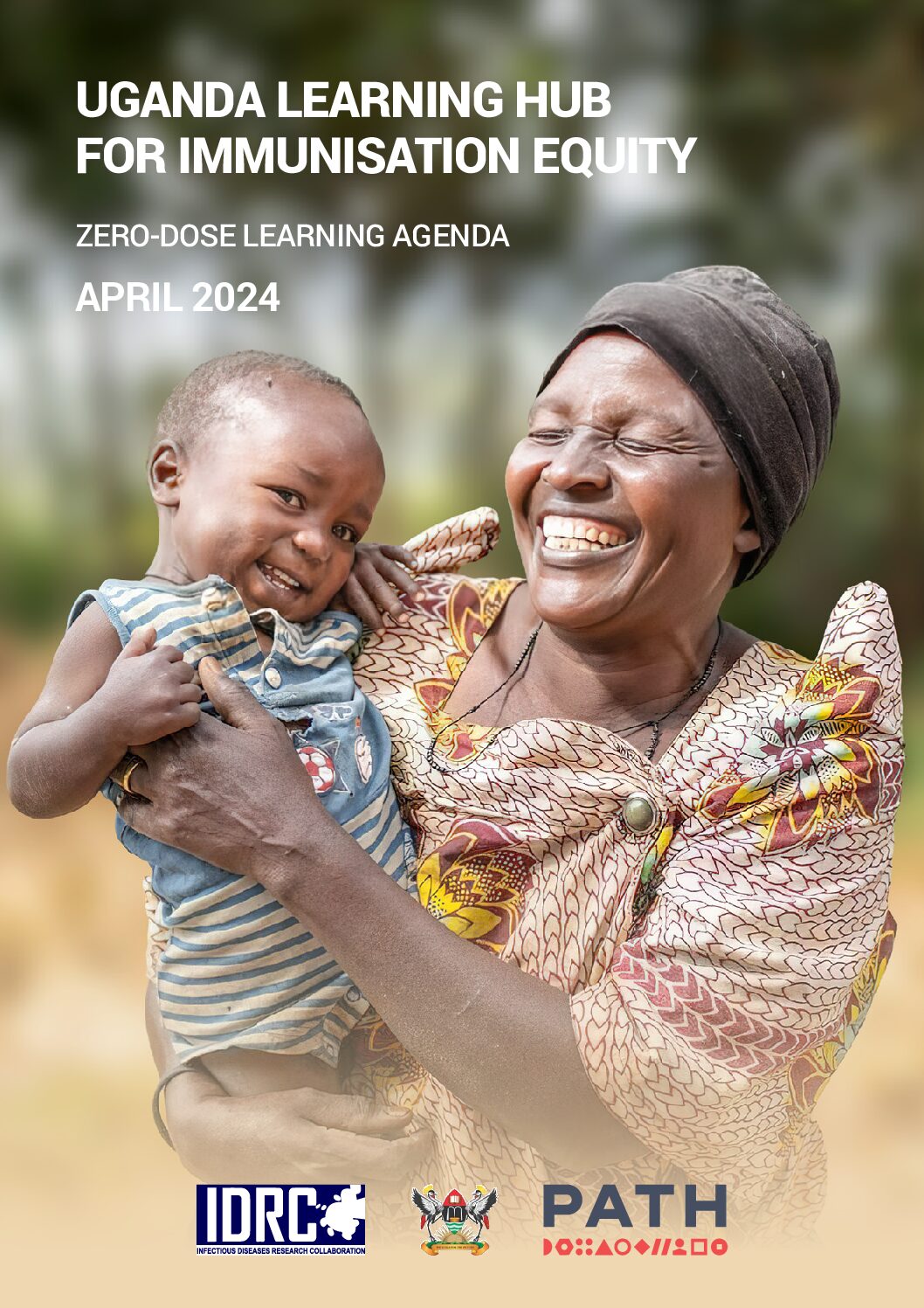
The Uganda Learning Hub for Immunisation Equity –composed of the Infectious Diseases Research Collaboration, PATH in Uganda, and Makerere University School of Public Health–developed an overarching learning agenda that describes learning questions, methods, and approaches using ongoing work on ZDC and UIC identification performed by the Uganda Ministry of Health and immunisation partners. This learning agenda serves as a platform for understanding perspectives on equity in immunisation in Uganda.

Click the link below to read the full report and explore the findings and recommendations in detail.

Uganda Learning Hub for immunisation equity – Zero-Dose Learning Agenda

PATH CVIA 108 PROJECT:

Infant Malaria Vaccine Schedule Optimization


Study Period: May 2024- December 2027

The CVIA 108 project is a Phase 2b multicenter randomized, placebo-controlled, double-blind, study evaluating the safety, immunogenicity and efficacy of R21/Matrix-M Malaria Vaccine (R21/MM)  in African infants with different immunization schedules. The project is implementated by Infectious Diseases Research Collaboration (IDRC) with funding from PATH Center for Vaccine Innovation and Access (Grant number: IDRC- Uganda_GAT.588511-01728256-PRE).

R21/MM vaccine has been recommended by the World Health Organisation to prevent clinical malaria in young children living in moderate to high transmission areas of Sub-Saharan Africa; with the first dose delivered at 5-6 months of age and two subsequent doses given monthly. The vaccine has not been evaluated for efficacy in younger groups. Thus, evidence about the safety, immunogenicity, and efficacy of R21/MM in younger infants is lacking.

The project will evaluate how age at first paediatric vaccine dose and time intervals between doses modify the immunogenicity of the vaccine and the efficacy in protecting infants against Plasmodium falciparum malaria clinical disease. We will compare the safety, immunogenicity, and efficacy of three doses of R21/MM in infants at 6 weeks of age at time of first vaccination in a conventional 6-10-14 week vaccine schedule (compressed schedule) and in infants at 8 weeks of age at time of first vaccination receiving three doses at 8-16-24 weeks (relaxed schedule). All infants will receive their routine paediatric vaccines on the same visits. Placebo arms will be included to evaluate both efficacy and potential interference of immune responses from co-administered routine vaccine.


Objectives

Primary objectives

  1. Immunogenicity: To describe the anti-CS NANP antibody responses elicited following the primary 3-dose schedule of R21/MM for the “compressed” as compared to the “relaxed” immunization schedule categories.
  2. Safety: To describe the reactogenicity, tolerability, and safety of R21/MM administered as a four-dose regimen to vaccine-naïve infants in two different vaccine immunization schedule categories (“compressed” and “relaxed”), with a booster dose (dose 4) at 15 months of age, when co-administered with routine immunizations


Secondary objectives

  1. Immunogenicity: To describe the anti-CS NANP antibody responses elicited following the 4th dose of R21/MM for the “compressed” as compared to the “relaxed” immunization schedule categories.
  2. Efficacy:
  3. To evaluate the protective efficacy of R21/MM against clinical malaria disease caused by Plasmodium falciparum (Pf) by assessing time-to-first malaria episode in African infants randomized to either the “compressed” or “relaxed” immunization schedule category.
  4. To evaluate the protective efficacy of R21/MM against all episodes of clinical malaria disease caused by Plasmodium falciparum by assessing the number of clinical malaria episodes in African infants randomized to either the “compressed” or “relaxed” immunization schedule category


Study Site:  IDRC Tororo study clinic

Principal Investigator: Dr. Joaniter I. Nankabirwa

Study Sponsor: PATH Center for Vaccine Innovation and Access

MMS in Ugandan refugees project

Surveillance of P. falciparum Drug and Diagnostic Resistance in Refugee Populations

Study Period: May 2024-April 2027

The malaria molecular surveillance (MMS) in Ugandan refugee populatons is a three-year project funded by the BMGF (Grant ID: INV-067853) and GSK (Grant number 222739) to conduct a comprehensive malaria molecular surveillance in refugee populations and generate high quality molecular, epidemiological and entomologic data for monitoring the geographic and temporal trends in key malaria genomic and epidemiologic data to inform interventions to best protect refugee and local host populations. This project is led by the Infectious Diseases Research Collaboration (IDRC) in collaboration with the University of California, San Francisco (UCSF), Makerere University, Kampala, Uganda, Uganda Christaian University, Mukono, Uganda,  the Ministry of Health Uganda (MoH), Brown University, USA, Malaria Consortium, South Sudan, and National Institute of Public Health, Burundi

 Malaria remains a major global health problem, and emerging antimalarial drug and diagnostic resistance in Africa threaten control efforts. Investments in molecular, parasitological, and clinical surveillance have enabled the early detection of emerging resistance phenotypes, facilitating informed policy changes before resistance becomes widespread. However, conflicts and instability make routine surveillance nearly impossible in large areas of the continent, leaving significant gaps in our understanding of the dynamics of emerging resistance. Performing safe and effective molecular surveillance in parasite populations originating from conflict zones will be important to characterize malaria epidemiology, enabling mitigation of the impacts of resistance.

Objectives

  • To characterize drug resistance profiles of falciparum parasites collected from newly arrived refugees, local host populations, and populations living in conflict regions.
  • To characterize diagnostic resistance in falciparum parasites collected from newly arrived refugee, local host populations, and populations living in conflict regions.
  • To support cross-border collaboration to improve regional surveillance for drug and diagnostic resistance.

Study Site:  Uganda, Burundi, Democratic Republic of Congo and South Sudan, and other countries from where the refugees are originating.

Collaborators: Infectious Diseases Research Collaboration (IDRC), Uganda Ministry of Health (MoH), Makerere University, University of California, San Francisco (UCSF), Uganda Christaian University, Brown University, Malaria Consortium, South Sudan, and National Institute of Public Health, Burundi

Principal Investigator: Stephen Tukwasibwe

Study Sponsor: BMGF and GSK

Title: Mechanisms of varied sensitivity of P. falciparum field isolates to the antimalarial drug pipeline (VSPA)

Study period:  2023 – 2028

Major Goals: 

1. To characterise ex vivo sensitivity to lead antimalarial compounds of P. falciparum field isolates. 

2. To characterise genotypes of drug sensitivity outliers to identify mediators of decreased sensitivity in field isolates to lead antimalarial compounds. 

3. To characterise phenotypes of drug sensitivity outliers to elucidate resistance mechanisms of lead antimalarial compounds.

Study site: Tolab, Laboratory Tororo, Kalongo Laboratory and Molab and Butabika Kampala Laboratories

Collaborators: Infectious Diseases Research Collaboration (IDRC), Makerere University College of Health Sciences, University of California San Francisco, Stanford University
Principal Investigators: Samuel L. Nsobya Mellissa Conard, Roland Cooper and  Philip Rosenthal  
Study Sponsor: National Institutes of Health (NIH), National Institute of Allergy and Infectious Diseases (NIAID)

Title: Resistance of Malaria Parasites to Artemisinin-Based Therapies (REACT)

Study period: 20202025

Major Goals: The goals of this project are: 

(1) To assess impacts of selective pressures for resistance of malaria parasites to ACTs used for the treatment and chemoprevention of malaria,

(2) To characterize phenotypes associated with diminished drug sensitivity, and (3) to identify mediators of high level drug resistance.

Study site: Tolab, Laboratory Tororo, Kalongo Laboratory and Molab and Butabika Kampala Laboratories

Collaborators: Infectious Diseases Research Collaboration (IDRC), Makerere University College of Health Sciences, University of California San Francisco, Stanford University
Principal Investigators: Samuel L. Nsobya Mellissa Conard,  Roland Cooper and Philip Rosenthal  
Study Sponsor: National Institutes of Health (NIH), National Institute of Allergy and Infectious Diseases (NIAID)

Surveillance to track and characterise antimalarial resistance trends in Ugandan Plasmodium falciparum parasites (STARTUP) 

Study period: 2022-2027.

Major Goals: 

We will characterise emerging antimalarial resistance at field sites across Uganda. We will use molecular, parasitological and epidemiological approaches to understand better the extent and origins of drug resistance, the genotypes that contribute to resistance, and the epidemiological factors that facilitate the evolution of resistant parasites. We hypothesise that multiple locally derived artemisinin-resistant lineages have emerged but that only a subset of lineages with optimal fitness will expand geographically; that decreased efficacy of artemisinins will facilitate the selection of resistance to key partner drugs; and that certain ecological and epidemiological factors will be associated with the geographical and temporal spread of resistant parasites. We will test these hypotheses with the following aims.

Aim 1. Molecular characterisation of resistance to artemisinins and key partner drugs in Uganda

Aim 2. Parasitological characterisation of resistance to artemisinins and key partner drugs in Uganda

Aim 3. Characterisation of ecological and epidemiological factors associated with ACT resistance markers.

Study site: Tolab, Laboratory Tororo, Kalongo Laboratory and Molab and Butabika Kampala Laboratories

Collaborators: Infectious Diseases Research Collaboration (IDRC), University of California San Francisco, Stanford University, Makerere University College of Health Sciences
Principal Investigators: Samuel L. Nsobya Mellissa Conard, Philip Rosenthal and Roland Cooper 
Study Sponsor: National Institutes of Health (NIH)

VERSE Project:

The Vaccine Economics Research for Sustainability and Equity

Study Period: December 2022-June 2023

The Vaccine Economics Research for Sustainability and Equity (VERSE) project is a collaborative effort between Makerere University School of Public Health (MakSPH) and the Infectious Diseases Research Collaboration (IDRC). The project focuses on equity analysis using the VERSE toolkit to measure inequities in immunization coverage and other health outcomes in Kampala, Uganda. The VERSE toolkit provides a standardized model to assess, track, and address vaccine coverage inequities, monetizing the economic losses due to inequity, and evaluating the trade-offs between equity and efficiency in immunization programs.

The VERSE project aims to develop and apply the VERSE Equity Toolkit to measure and address inequities in immunization coverage in Kampala. The toolkit allows for comprehensive analysis by incorporating various factors such as socioeconomic status, education, and geographic location. The project includes data collection, analysis of vaccine coverage, and the dissemination of findings.

Objectives

  • Analyze Inequities in Immunization Coverage: Utilize the VERSE toolkit to measure and analyze inequities in DPT3 and full immunization coverage in Kampala, Uganda. This analysis will focus on socioeconomic status, education level, and other relevant factors.;
  • Assess Inequities in the Use of Long-Lasting Insecticidal Nets (LLINs): Apply the VERSE toolkit to evaluate the inequities in the use of LLINs before and after a nationwide mass distribution campaign in 48 districts of Uganda;
  • Generate Comprehensive Equity Assessments: Produce detailed reports and technical write-ups that quantify the drivers of vaccine coverage and LLIN usage, providing a multifaceted perspective on equity and efficiency; and
  • Collaborate on Manuscript Preparation: Contribute to the drafting and submission of two manuscripts detailing the findings from the analysis of immunization coverage and LLIN usage inequities.

Study Site:  Kampala

Collaborators: Infectious Diseases Research Collaboration (IDRC), Makerere University School of Public Health (MakSPH)

Study Sponsor: Makerere University School of Public Health (MakSPH)

UGANDA LEARNING HUB FOR IMMUNISATION EQUITY

Study Period: February 2023 – December 2025

With support from Gavi, the Vaccine Alliance, the Infectious Diseases Research Collaboration (IDRC) together with PATH and Makerere University School of Public Health (MakSPH) are implementing a three-year Learning Hub (LH) for immunization equity project in Uganda. The LH is being implemented in close collaboration with the immunisation program of the Ministry of Health and aims to generate evidence on identifying and reaching Zero Dose children (ZDC), Under Immunized (UI) children, and missed communities in Uganda to inform immunization equity interventions. Specifically, the project seeks to:

1. characterize the ZDC, UI children, and missed communities in Uganda, and understand the barriers and challenges of reaching them.
2. examine the implementation outcomes (i.e., acceptability, reach, adoption, fidelity, implementation cost, sustainability and effectiveness) of ongoing and planned immunisation approaches to reaching ZDC, UI children, and missed communities in Uganda.
3. evaluate the utility of different data capture platforms for identifying ZDC, UI, and missed communities in Uganda.

Principal investigator/Hub director: Prof. Moses Kamya
Study Site: Kasese, Mubende and Wakiso districts

Achievements
• A launch meeting for the project was held on 27th March 2024.
• Developed a learning agenda to inform the design and implementation of the immunization equity interventions in Uganda.
• Conducted a rapid assessment of barriers to reaching ZDC and UI children between August 2023 and March 2024 in Kasese, Wakiso and Mubende districts.
• Undertook an evaluation of the utility of the different data capture platforms for identifying ZDC, UI and missed communities in Uganda in Lira and Mukono districts (March to December 2023).
• Conducted an evaluation of UNICEF’s zero dose support to Kamuli and Wakiso districts (November 2023 to July 2024).
• Conducted a baseline targeted community survey in Mubende district in April to June 2024.
• Conducted dissemination meetings in Mubende (on 21st June 2024) and at national level (on 28th June 2024)

The immune response to malaria within the germinal centre (Tonsil Studies) 

Study period: November 2022-October 2023

This project aims to study the development of adaptive immunity to malaria in the germinal centre using tonsil tissues obtained from children living in malaria-endemic areas who have undergone tonsillectomy at Mbale Regional Referral Hospital. Specifically, the study aims to:

  1. Map the immune response within the tonsil during malaria infection, 
  2. Use tonsil cells from malaria infection and/or previously exposed children in germinal centre organoids to study malaria immune responses in vitro.

Study site: Mbale Regional Referral Hospital

Collaborators: Infectious Diseases Research Collaboration, Busitema University, Queensland Institute of Medical Research (QIMR) Berghofer, Burnet Institute (Australia) and Stanford University

Principal Investigators: Abel Kakuru, Michelle Boyle, and Christine Adoch,

Study Sponsor: Queensland Institute of Medical Research (QIMR) Berghofer


P4P STUDY PROFILE:
Title: Community-based, peer-delivered PrEP for women engaged in sex work in rural Uganda: The Peers for PrEP (P4P) study.
Study period: (2022-2026)
Study synopsis: This study is being conducted in Ntungamo district in Southwestern Uganda in two communities (Rubaare and Rwashamaire). The study comprises two phases: Phase A – intervention development and refinement – followed by Phase B – a single arm pilot trial to evaluate the hypothesis that a community-based, peer-delivered PrEP intervention for women engaged in sex work (WESW) in rural southwestern Uganda will be feasible, acceptable, and increase PrEP uptake and adherence vs. standard of care (SOC).

Objectives:
Phase A Primary Objective: To develop and refine a community-based, peer-delivered PrEP intervention for women engaged in sex work in rural Uganda
Phase B Primary Objective: To assess the feasibility, acceptability, and preliminary effectiveness of a community-based, peer-delivered PrEP intervention for women engaged in sex work in rural Uganda
Study site: Ntungamo district in rural Southwestern Uganda.
Collaborators: Infectious Diseases Research Collaboration (IDRC), Makerere University College of Health Sciences, University of California San Francisco, Stanford University.

Principle investigators: Catherine A. Koss, Jane Kabami.
Co-investigators: Moses R. Kamya, Laura B. Balzer, Cecilia Akatukwasa, Jennifer Velloza & James Rooney.
Study sponsor: University of California, San Francisco (UCSF).
Study funder: Gilead Sciences.

IMMRSE-U: Implementing Malaria MoleculaR SurveillancE in Uganda

Study Period: November 2021-November 2024

This project is a collaboration between IDRC, the Uganda Ministry of Health, the NIH-funded African Center of Excellence in Bioinformatics (ACE), and the University of California, San Francisco, to integrate malaria genomics data into routine surveillance activities in Uganda. 

Objectives

• Estimate prevalence and spread of drug and diagnostic malaria parasites in Uganda

• Estimate prevalence of non-falciparum malaria infections across Uganda

• Estimate trends in malaria epidemiology and transmission using data from health centres

• Regularly disseminate genomic data to the Uganda Ministry of Health (NMCD) to inform malaria control policy

This study will collect Dry Blood Spot (DBS) samples for malaria genomic analysis from at least 30 health centres across Uganda in areas of varying malaria transmission. Of particular importance are areas of low transmission targeted for malaria elimination, border districts, and areas earmarked for drug and diagnostic resistance surveillance. 

Highly multiplex amplicon deep sequencing performed on these samples will provide genomic data that can be linked to individual-level malaria surveillance data from the health facilities. By collecting genomic information twice yearly at locations across the country, this study will allow for increased monitoring for HRP2/3 deletions and drug resistance mutations and to monitor their spread. 

It also involves the training and mentoring of five bioinformatics scientists and establishing a state-of-the-art genomics facility at the Central Public Health Laboratory in Butabika, Uganda. 

This study will generate actionable, impactful information for the Ministry of Health and National Malaria Control Division.  

Study Site: Butabika Hospital

Collaborators: Infectious Diseases Research Collaboration (IDRC), Uganda Ministry of Health (MoH), NIH-funded African Center of Excellence in Bioinformatics (ACE), and the University of California, San Francisco

Principal InvestigatorsUganda: Dr Isaac Ssewanyana, Prof. Moses Kamya, Prof. Sam Nsobya (Makerere University and IDRC). 

Principal Investigators-USA: Dr. Jessica Briggs, Dr. Melissa Conrad, Dr. Bryan Greenhouse and Dr. Phil Rosenthal (UCSF)

Study Sponsor: The Bill & Melinda Gates Foundation 

Project : Feasibility of Primary Repair for Anorectal Malformations in Uganda

Study period 2021-2022

Background Surgically correctable congenital anomalies account for an increasing burden of death and disability for children in low- and middle-income countries (LMIC).

In our setting, most patients with ARMs undergo three separate staged operations: 1) initial colostomy formation; 2) repair of the ARM (called anoplasty), and 3) colostomy closure. Three operations result in a long treatment duration, potential complications with each procedure, delays in care, and stigma associated with ostomies. We have previously demonstrated that children live 2-3 years on average with their ostomies, and that over a third of families experience catastrophic health expenditure. Half of male caregivers leave the family and children are not allowed to attend school with an ostomy. An intervention that shortens duration of life with an ostomy would reduce the financial burden, social rejection, and school attendance. In higher-income countries, some children receive a single operation or a 2-stage procedure. Safety of a 1- or 2-stage procedure in Uganda is unknown, due to the different resources available, and associated social and economic impact for families is also unknown.  My specific aims are designed to address these important gaps in knowledge.

Significance

By offering 1- or 2- stage procedures for ARMs in a resource-limited setting, we expect to reduce health care expenditure by families, length of treatment, length of hospital stay, frequency of hospital visits, and social rejection. The results could also have a broad impact on improving the standard of pediatric surgical care in LMICs like Uganda by demonstrating that a single stage repair is feasible in a resource-limited setting, and offering guidelines such as the ARM score that may be used in similar settings.

Objectives

1: To determine the effectiveness and complications of 1- and 2- stage repair for ARMs.

2: To develop an ARM score to guide decision-making for need of staged procedures with an ostomy, rather than primary anoplasty.

3: To assess the financial and social impact of reducing or eliminating time living with an ostomy for children with ARMs.

Study site: Mbarara Regional Referral/Teaching  hospital

Mentors Professor Doruk. Ozgediz and Dr. Olivia Kituuka, Dr. Martin Situma, and Dr. Francis Bajunirwe

Principal Investigator Felix Oyania

Study sponsor The National Institute of Diabetes and Digestive and Kidney Diseases and the Fogarty International Center of the National Institutes of Health (NIH) under Award Number D43TW009343 and the University of California Global Health Institute (UCGHI).

Portfolio approach to developing the next generation of malaria treatments for Africa (“PAMAFRICA”)

Study Period: April 2020-March 2025

The PAMAfrica consortium brings together a global medicines company, a not-for-profit product development partnership and leading academic institutions in Africa and Europe. PAMAfrica aims to develop new medicines for severe and uncomplicated malaria to combat emerging artemisinin resistance. The projects include developing the first new malaria treatment for babies under 5kg, a new fast-acting medicine for severe malaria, and new combinations to treat drug-resistant uncomplicated malaria.

The European & Developing Countries Clinical Trials Partnership (EDCTP) awarded a new grant to the new PAMAfrica research consortium led by Medicines for Malaria Venture (MMV). The consortium will support the development of new treatments for malaria in the most at-risk populations, including babies, patients with severe malaria, and those with drug-resistant infections. The EDCTP grant of €21.9 million will be matched by funding from MMV, Novartis and partners. Over 5 years, the grant will support the development of a portfolio of projects executed under the umbrella of the PAMAfrica research consortium. Clinical trial capabilities in Africa will also be strengthened to ensure each site involved can effectively operate to ICH-GCP regulatory standards. The consortium includes seven research organisations from Burkina Faso, Gabon, Germany, Mozambique, Spain and Uganda, and Novartis and Merck pharmaceutical companies. IDRC will conduct two clinical trials and support efforts to build clinical capacity and train scientists across Africa.

1. An adaptive, randomized, active-controlled, open-label, sequential cohort, multicentre study to evaluate the efficacy, safety, tolerability and pharmacokinetics of intravenous cipargamin (KAE609) in adult and paediatric participants with severe Plasmodium falciparum malaria (KARISMA – KAE609’s Role in Severe Malaria)

The study will evaluate the efficacy, safety, tolerability and pharmacokinetics (PK) of intravenous cipargamin in participants with severe Plasmodium falciparum malaria. Severe malaria is a medical emergency and is affecting primarily young children in Africa. Injectable artesunate is the standard of care for treating severe malaria and is highly efficacious. However, the spread of artemisinin resistance in Plasmodium falciparum in Asian countries poses a threat for future treatment of patients with this life-threatening disease. To mitigate this risk, there is a need for another drug in malaria-endemic countries. Cipargamin treatment results in rapid clearance of parasites, including artemisinin-resistant parasites. This study investigates the efficacy (parasite reduction and clinical outcome), safety, tolerability and pharmacokinetics of different injectable dose regimens of cipargamin compared to injectable artesunate. 

This will be an adaptive, multicentre, randomised, open-label, sequential cohort study in participants aged ≥ 12 years (Cohorts 1-2) and ≥ 6 months to < 12 years (Cohorts 3-5) with a diagnosis of moderately severe and severe P. falciparum malaria. The first cohort (Cohort 1) will be small, including participants aged 12 years or over-diagnosed with moderately severe malaria and high parasitemia. This cohort will evaluate safety and parasite clearance rates before continuing into Cohorts 2-5, including only severe malaria patients according to WHO criteria. Progressively younger participants will be included with each new cohort from Cohort 2 onwards. This design aims at minimising risks for paediatric participants < 12 years.

Participants will be hospitalised under close supervision for at least 72 hours after initiating IV treatment and until oral treatment with Coartem has been undertaken. Hospitalisation can be extended for participants based on disease signs until IV treatment has been completed and oral treatment with Coartem has been initiated. All participants will be followed up until Day 29. The sponsor will continuously monitor data related to participants’ efficacy and safety. If participants randomised to any IV cipargamin arms meet either the safety criteria or lack of efficacy criteria, the study may be paused and a data safety review conducted.

2. Phase IIa Proof of Concept, Multicentre, Randomized, Open-label Study to Evaluate the Safety, Efficacy, and Pharmacokinetics of the Combination M5717 plus Pyronaridine Administered once Daily for 1 or 2 Days to Adults and Adolescents with Acute Uncomplicated Plasmodium falciparum Malaria

Artemisinin-based combination therapies (ACTs) have been the gold standard for acute uncomplicated P. falciparum malaria. Still, the increasing reports of emergent resistant strains to artemisinin-related compound therapies make looking for new therapeutic tools necessary. In this context, the current study intends to explore in a Proof of Concept the safety, preliminary efficacy, and pharmacokinetics (PK) of M5717 (free base) in combination with pyronaridine (tetraphosphate). An ACT containing a variety of pyronaridine-artesunate (Pyramax) will be used as internal control, mainly for safety.

The study is a Phase IIa, randomised, open-label, multicentre study in adults and adolescents (≥ 12 and ≤ 55) diagnosed with acute uncomplicated P. falciparum malaria. The study will consist of 2 parts. Part A will be a small safety/PK run-in group of 12 adults with acute uncomplicated P. falciparum malaria designed to monitor safety and exposure. After the Internal Data Monitoring Committee (IDMC) reviews safety stopping criteria assessment, Part B will continue at the planned or adjusted dose based on exposure in Part A. Part B will include adults and adolescents (≥ 12 and ≤ 55 years of age). A cohort B0 composed of 25 adults and adolescents will serve as the basis to ensure the 1-day dosing leads to the expected exposures. After the IDMC decision on Cohort B0 safety, efficacy, and PK, 25, 50, and 25 participants will be randomised to Cohorts B1, B2, and B3. The intent is to develop a 1- or 2-day dosing regimen of the M5717-pyronaridine combination.

PAMAfrica Master’s in Biostatistics Program

The European & Developing Countries Clinical Trials Partnership (EDCTP) awarded a grant to the new PAMAfrica research consortium led by Medicines for Malaria Venture (MMV). The consortium includes seven research organisations from Burkina Faso, Gabon, Germany, Mozambique, Spain and Uganda and a pharmaceutical company, Novartis. The grant will support efforts to build and strengthen human clinical research capacity through scholarships for a Master’s degree in Biostatistics. Two students from Uganda will be supported for the Master’ degree in Biostatistics training. The MSc Biostatics degree programme focuses on quantitative research in health-related fields to develop a career in Biostatistics, a growing field in sub-Saharan Africa due to increased biomedical research. The support aims to enhance Bio statistical graduate training capacity and boost the number of researchers and practitioners. 

PAMAfrica PhD programme

PAMAfrica grant includes 5 PhD scholarships for students coming from the following partnering institutions (1 scholarship per institution):

• CISM/Fundacao Manhica, Mozambique

• CERMEL, Gabon

• Groupe de Recherche Action en Sante (GRAS), Burkina Faso

• Infectious Diseases Research Collaboration (IDRC), Uganda

• Centre National de la Recherche Scientifique et Technologique (CNRST) – Institute de Recherche en Science de la Santé (IRSS), Burkina Faso

The Institute for Tropical Medicine (ITM), University of Tübingen, hosts the PhD program. Institute for Tropical Medicine (ITM) is a leading institution performing clinical trials in infectious diseases, especially antimalarial interventions and vaccines, at its dedicated Clinical Trials Platform (CTP) and in collaboration with partner sites in tropical countries. 

Study Site: Tororo Hospital, Tororo District

Collaborators: Medicines for Malaria Venture (MMV)

Principal Investigators: Dr Yeka Adoke

Study Sponsor: EDCTP

Case Managers and Peer Support Groups (CAMPS) for Prophylaxis Adherence in Rheumatic Heart Disease

Study Period: August 2022- July 2023

The CAMPS study is a pragmatic randomised field trial to test and evaluate scalable secondary antibiotic adherence support models for children newly diagnosed with rheumatic heart disease (RHD), integrated within routine care at the health centre IIIs and IVs over 12 months.

RHD is the most common acquired cardiovascular disease among children and young adults, with at least 40.5 million current clinical cases worldwide. RHD is responsible for 340,000 annual deaths and accounts for the most significant cardiovascular disease-related loss of disability-adjusted life years among 10-14-year-olds. Studies suggest that early diagnosis and initiation of secondary antibiotic prophylaxis (SAP) improves 2-year outcomes for children with latent RHD. However, long courses of SAP with every-4-week BPG are very challenging to maintain worldwide. 

CAMPS aim to determine 1-year BPG adherence rates of children newly diagnosed with latent RHD in Uganda randomised to one of two support strategies: a) Usual care (Arm 1) and b) Peer group + Case Manager strategy (Arm 2). The primary outcome will be adherence to secondary antibiotic prophylaxis at 12 months. CAMPS will also explore patient-reported outcomes, including treatment satisfaction, patient health-related quality of life, and caregiver quality of life, in relation to support strategy.

The CAMPS study runs in the Tororo district in Eastern Uganda at 11 participating health centres. 

Study Site: Tororo Hospital, Tororo District

Collaborators: Uganda Heart Institute (UHI)

Principal Investigators: PI- Joselyn Rwebembera, Co-PI Sarah deLoizaga Carney

Study Sponsor: Children’s Hospital Medical Center (“CHMC”)

PCE is a comprehensive, country-level, prospective evaluation that utilize a variety of methods in order to provide a detailed, real-time picture of the implementation, effectiveness and impact of Global Fund-supported programmes in selected countries. The goal of PCE is to generate evidence on program implementation through impact in order to accelerate progress towards strategic objectives of the Global Fund Strategy and to facilitate continuous improvement of program implementation and quality.

Objectives:

PCE will establish country evaluation platform that supports dynamic, continuous monitoring and evaluation, learning, and problem solving with the objectives of:

  • Examining and analysing implementation of the Global Fund Strategic Objectives
  • Providing real-time information to allow countries and the Secretariat to adapt and adjust programme implementation
  • Identifying challenges that impede programme performance and opportunities to inform and improve programme quality for impact, effectiveness, and value-for-money
  • Measuring programme contributions to impact
  • Strengthening country M&E systems for robust measurement and
  • Identifying and disseminating best practices to improve the Global Fund model.

Global Fund Evaluation Reports:

  1. Global Fund Prospective Country Evaluation- Resource Tracking Study For Malaria.    Download Report.
  2. Prospective Country Evaluation Uganda 2021 Extension Report.    Download Report.
  3. Prospective Country Evaluation Uganda 2020-2021 Annual Country Report.    Download Report.
  4. Prospective Country Evaluation Uganda 2020 Annual Country Report.    Download Report.
  5. Prospective Country Evaluation Uganda 2019 Annual Country Report.    Download Report.
  6. Global Fund Prospective Country Evaluation-Resource tracking Study for Malaria 2019.    Download Report.
  7. The Global Fund Prospective Country Evaluation Uganda Report: Evidence from Uganda’s 2017 application process.    Download Report.
  8. Prospective Country Evaluation Uganda 2018 Annual Country Report.    Download Report.
  9. Global Fund Prospective Country Evaluation, Final inception Phase Report for PCE in Uganda, Guatemala and Democratic Republic of the Congo.   Download Report.

Victor Asua

Victor Asua is a dedicated PhD student pursuing his studies at the prestigious Institute for Tropical Medicine, Eberhard Karls University of Tübingen in Germany. With a strong passion for tackling the global issue of antimalarial drug resistance, Victor’s PhD thesis research focuses on the evolution of antimalarial drug resistance in Uganda, explicitly delving in to phenotype-genotype association studies. 

The primary objectives of Victor’s research project are twofold. Firstly, he aims to meticulously track the spatiotemporal patterns of antimalarial drug resistance evolution, providing critical insights into its development and spread. Secondly, Victor seeks to assess population-level signatures of genomic evolution within drug-resistant parasite isolates, deciphering the genetic adaptability of these disease-causing organisms. 

To achieve these ambitious goals, Victor’s PhD project harnesses the power of next-generation sequencing and cutting-edge computational approaches. By employing these innovative techniques, he aims to unravel the underlying mechanisms and evolutionary adaptations that drive antimalarial drug resistance. 

Before commencing his PhD training, Victor earned his master’s degree in Immunology and Clinical Microbiology. His academic pursuits were generously supported by funding from the Fogarty International Centre training on Malaria research grants, administered by the esteemed Infectious Diseases Research Collaboration (IDRC). Victor’s exceptional grasp of immunology and clinical microbiology forms a solid foundation for his endeavors in the field of malaria research. 

Notably, Victor has also distinguished himself as an early career co-investigator in the ICEMR-Uganda program, funded by the US-National Institute for Health. This program further showcases his commitment to contributing to the scientific community’s understanding of infectious diseases particularly malaria. 

Victor Asua’s unwavering dedication, comprehensive knowledge, and innovative research methods make him a promising young scientist in the fight against antimalarial drug resistance. Through his influential work, he aspires to make significant contributions to the field of malaria research and ultimately enhance our ability to combat this widespread global health concern. 

Monica Mbabazi 

Monica Mbabazi is a highly accomplished individual with a solid academic background and expertise in the field of bioinformatics. She holds a Master’s degree in Science. She is currently pursuing her doctoral studies in bioinformatics, focusing on understanding the genetic diversity and transmission networks of P. falciparum in south western Uganda. 

As a PhD student, Monica’s research interests lie in exploring the intricate genetic makeup of the malaria-causing parasite P. falciparum, particularly in the context of the transmission networks prevalent in the south western region of Uganda. Her work involves analysing large-scale genomic data, employing advanced computational techniques, and utilising bioinformatics tools to unravel valuable insights about the parasite’s diversity and transmission patterns. 

Monica’s passion for understanding malaria and her dedication to exploring genetic variations with P. falciparum has led her to serve as a postdoctoral research fellow at the Infectious Diseases Research Collaboration (IDRC). In this role, she works closely with a multidisciplinary team, contributing her expertise to ongoing research projects on infectious diseases. 

With her strong academic foundation, expertise in bioinformatics and commitment to combating malaria, Monica Mbabazi is making significant, contributions to the field of infectious diseases research. Her work not only sheds light on the genetic diversity and transmission networks of P. falciparum but also paves the way for improved strategies in malaria control and prevention. 

Shahiid Kiyaga 

Shahiid Kiyaga is a dedicated and passionate researcher in the field of bioinformatics, with a specialization in malaria genomics. He holds a Masters in Science degree and is currently pursuing his Ph.D. in Bioinformatics. With a keen interest in the intersection of biology, data analysis, and computational modelling, Shahiid has made significant contributions to the field through his work on machine learning-based modelling of malaria incidence. 

As an IDRC Bioinformatics Research Fellow, Shahiid’s primary focus lies in studying the transmission patterns of malaria in high risk areas of Uganda. Utilizing his expertise in bioinformatics, he applies machine learning algorithms to large datasets to identify important factors contributing to malaria incidence. By developing computational models, he aims to predict and understand the spread of the disease and develop effective preventive measures. 

Shahiid’s research not only encompasses the analysis of genetic information related to malaria, but it also incorporates various environmental and socio-economic factors that influence transmission rates. By integrating multi-dimensional data, he strives to create comprehensive models that can assist in the development of targeted interventions and strategies to combat malaria in Uganda. 

His work demonstrated the fusion of cutting-edge bioinformatics techniques and epidemiology, bringing forth innovative solutions to address the global challenge of malaria. Shahiid’s determination and relentless pursuit of knowledge have been recognized by his peers and mentors, as he continues to make significant strides in his research field. 

With a strong foundation in genetics and computational biology, Shahiid’s research has the potential to revolutionize the way malaria is understood and managed. Through the application of machine learning algorithms and bioinformatics tools, he aims to develop a comprehensive platform for predicting malaria outbreaks, assessing their severity, and designing efficient control measures. 

Aside from his research endeavors, Shahiid is an avid advocate for interdisciplinary collaboration in the field of health sciences. He actively participates in conferences, workshops, and academic communities to foster knowledge exchange and promote innovative approaches in malaria research. 

Shahiid Kiyaga’s impressive academic background, combined with his passion for bioinformatics and malaria research, positions him as a leading figure in the field. His contributions to the machine learning-based modelling of malaria incidence in high transmission regions of Uganda hold great promise in the fight against the devastating disease. 

Katairo Thomas 

Katairo Thomas is a dedicated and accomplished professional with a strong background in the field of epidemiology and biostatistics. He holds a Masters in Science and his currently pursuing a PhD in Epidemiology of Plasmodium falciparum drug resistance in Uganda, under the Infectious Diseases Research Collaboration (IDRC). 

With a focus on clinical epidemiology and biostatistics, Thomas possesses a comprehensive understanding of the factors influencing the spread and development of diseases. His expertise lies in studying and analysing the transmission dynamics, genetic characteristics, and drug resistance of the P. falciparum parasite. 

As a member of IDRC, Thomas has been actively involved in research and fieldwork related to the genomics of drug resistance in Uganda. He collaborates closely with other researchers, scientists, and medical professionals to investigate the underlying mechanisms of drug resistance and identify potential solutions for combating the disease. 

Thomas’s work involves utilizing advanced statistical tools and techniques to analyse complex data sets and draw meaningful conclusions. He applies his knowledge of genomics and molecular biology to explore the factors contributing to the adaptation and survival of the P. falciparum parasite. His findings play a crucial role in shaping public health policies and interventions aimed at reducing the burden of malaria in Uganda and other affected regions. 

Beyond his academic pursuits, Thomas also serves as a genomics trainee at IDRC. This role allows him to further expand his expertise in the area of genomics and apply cutting-edge technologies to study the genetic basis of drug resistance. 

With his multidisciplinary background and commitment to advancing the field of epidemiology, Katairo Thomas is an invaluable asset to the IDRC research team. Through his research and training, he strives to make a significant impact in the fight against malaria and contribute to the overall improvement of global health. 

Kisakye Diana Kabbale

Kisakye Diana Kabbale is a highly accomplished individual in the field of medical research and infectious diseases. With a Bachelor of Medicine and Bachelor of Surgery (MBChB) degree, as well as a Masters in Science, she has continually demonstrated her commitment to advancing knowledge and finding solution to complex medical challenges. 

Currently, Kisakye Diana Kabbale holds the position of a research fellow at the Infectious Diseases Research Collaboration (IDRC). Her research focuses on the development of a deep amplicon sequencing panel for drug efficacy estimation and surveillance of drug resistance markers in East Africa initiative. This important study aims to improve treatment outcomes for infectious diseases prevalent in the region and combat the emergence of drug resistance. 

With her expertise in the field of infectious diseases, Kisakye Dianna Kabbale plays a vital role in the research collaboration. Her commitment to exploring innovative techniques, such as deep amplicon sequencing, showcases her dedication to finding practical solutions in the fight against infectious diseases. 

Kisakye Diana Kabbale’s deep understanding of medical research methodologies combined with her practical experience as a medical practitioner, makes her a valuable asset to the project. Her attention to detail and analytical skills allow her to accurately estimate drug efficacy and identify drug resistance markers, contributing to developing more targeted and practical treatment approaches. 

Beyond her academic and professional achievements, Kisakye Diana Kabbale is also known for her exceptional organisational and leadership abilities. Her strong work ethic and commitment to collaboration ensure seamless coordination among team members, fostering a productive research environment. 

As an emerging expert in her field, Kisakye Diana Kabbale is passionate about using her knowledge and skills to improve healthcare outcomes, particularly for vulnerable populations in East Africa. Her dedication to making a positive impact on public health is commendable, and she continues to push boundaries and pioneer new approaches in the field of infectious diseases research. 

Kisakye Diana Kabbale is a highly qualified and motivated individual with a strong background in medical research and infectious diseases. Her expertise and contributions to developing a deep amplicon sequencing panel for drug efficacy estimation and surveillance of drug resistance markers in the East Africa project have the potential to significantly impact medical practices and improve patient outcomes in the region. 

Stephen Tukwasibwe

Stephen Tukwasibwe, MSc, PhD, is a research scientific officer at the Infectious Diseases Research Collaboration (IDRC), Makerere University, and a lecturer in Biochemistry and Molecular Biology at Uganda Christian University. With expertise in malaria molecular epidemiology, Dr Tukwasibwe’s research focuses on understanding the evolution of antimalarial drug resistance in Uganda and neighbouring countries. 

Dr Tukwasibwe is dedicated to generating data that informs malaria control and treatment policies, with the ultimate goal of working towards malaria elimination in areas with a high disease burden. He oversees the malaria genomics and immunology activities at IDRC, providing crucial data on antimalarial and diagnostic resistance in Uganda. He actively advocates for incorporating this data into the decision-making process by policymakers at the Ministry of Health. 

One of his ongoing projects is the GloCal Health fellowship for the year 2023-2024. This project involves surveillance of malaria drug resistance in refugee children in Uganda. Given the challenges posed by conflicts in many areas of Africa, Uganda, with its large refugee population, presents a unique opportunity to study molecular markers of drug and diagnostic resistance in these populations.

 Through this project, Dr Tukwasibwe and his team collect samples from children entering Uganda refugee camps adjacent to South Sudan and the Democratic Republic of Congo. They determine the prevalence of malaria parasitemia, genotype markers of drug and diagnostic resistance, and evaluate the genetic relatedness of imported and local parasites. The resulting data will be instrumental in guiding treatment in policies for arriving refugees and reducing the spread of resistance. 

Dr Tukwasibwe has also completed projects like the “Malaria Drug and Diagnostic Resistance in Refugee Children in Uganda.” As the principal investigator, he utilised the funding from the Thrasher Early Career Award to investigate the prevalence of drug and diagnostic resistance markers in refugee children within Uganda. 

His contributions to science are exemplary. Dr Tukwasibwe has published several studies on the molecular basis of antimalarial drug resistance, associations between parasite genetic polymorphisms and drug sensitivity, and the impact of drug resistance on parasite fitness. Additionally, he has explored the role of immune system genes in malaria severity, providing insights into the genetics underlying the body’s immune response to the disease. 

Stephen Tukwasibwe’s research work has a significant impact on malaria control strategies and informs policy decisions in Uganda. With his dedication to translational research and expertise in malaria immunology and genomics, he continues to play a vital role in the fight against malaria in the region. 

(a) Tukwasibwe S, Mugenyi L, Mbogo GW, Nankoberanyi S, Maiteki-Sebuguzi C, Joloba ML, Nsobya SL, Staedke SG, Rosenthal PJ. Differential prevalence of transporter polymorphisms in symptomatic and asymptomatic falciparum malaria infections in Uganda. J Infect Dis. 2014; 210:154-7. PMID: 24446524; PMCID: PMC4162000.

(b) Tukwasibwe S, Tumwebaze P, Conrad M, Arinaitwe E, Kamya MR, Dorsey G, Nsobya SL, Greenhouse B, Rosenthal PJ. Drug resistance mediating Plasmodium falciparum polymorphisms and clinical presentations of parasitemic children in Uganda. Malar J. 2017; 16:125. PMID: 28327148; PMCID: PMC5361791.

(c) Tumwebaze P, Tukwasibwe S, Taylor A, Conrad M, Ruhamyankaka E, Asua V, Walakira A, Nankabirwa J, Yeka A, Staedke SG, Greenhouse B, Nsobya SL, Kamya MR, Dorsey G, Rosenthal PJ. Changing Antimalarial Drug Resistance Patterns Identified by Surveillance at Three Sites in Uganda. J Infect Dis. 2017; 215:631-635. PMID: 28039354; PMCID: PMC5853976.

(d) Cuu G, Asua V, Tukwasibwe S, Nsobya SL, Nanteza A, Kimuda MP, Mpimbaza A, Rosenthal PJ. Associations between Aminoquinoline Resistance Genotypes and Clinical Presentations of Plasmodium falciparum Infection in Uganda. Antimicrob Agents Chemother. 2020;64: e00721-20. PMID: 32660999; PMCID: PMC7508615.

(a) Walakira A, Tukwasibwe S, Kiggundu M, Verra F, Kakeeto P, Ruhamyankaka E, Drakeley C, Dorsey G, Kamya MR, Nsobya SL, Rosenthal PJ. Marked variation in prevalence of malaria-protective human genetic polymorphisms across Uganda. Infect Genet Evol. 2017; 55:281-287. PMID: 28939159; PMCID: PMC5685907.

(b) Mpimbaza A, Walakira A, Ndeezi G, Katahoire A, Karamagi C, Nsobya SL, Tukwasibwe S, Asua V, Rosenthal PJ. Associations between erythrocyte polymorphisms and risks of uncomplicated and severe malaria in Ugandan children: A case control study. PLoS One. 2018;13: e0203229. PMID: 30222732; PMCID: PMC6141089.

(c) Tukwasibwe S, Nakimuli A, Traherne J, Chazara O, Jayaraman J, Trowsdale J, Moffett A, Jagannathan P, Rosenthal PJ, Cose S, Colucci F. Variations in killer-cell immunoglobulin-like receptor and human leukocyte antigen genes and immunity to malaria. Cell Mol Immunol. 2020; 17:799-806. PMID: 32541835; PMCID: PMC7294524.

(d) Tukwasibwe S, Traherne JA, Chazara O, Jayaraman J, Trowsdale J, Moffett A, Jiang W, Nankabirwa JI, Rek J, Arinaitwe E, Nsobya SL, Atuheirwe M, Frank M, Godwin A, Jagannathan P, Cose S, Kamya MR, Dorsey G, Rosenthal PJ, Colucci F, Nakimuli A. Diversity of KIR genes and their HLA-C ligands in Ugandan populations with historically varied malaria transmission intensity. Malar J. 2021; 20:111. PMID: 33632228; PMCID: PMC7908804.

Complete list of published work: https://scholar.google.com/citations?hl=en&user=n2MStNgAAAAJ


With support from Gavi, IDRC has conducted evaluations of Uganda’s immunisation programme since 2013. Below is an overview of the evaluations.

1. The GAVI Full Country Evaluation (FCE):

This evaluation was conducted in two phases. Phase one (2013-2016) was implemented in Bangladesh, Mozambique, Uganda, and Zambia, in collaboration with the Institute for Health Metrics and Evaluation (IHME) at the University of Washington (UW) and PATH in the United States. The goal of this phase was to understand and quantify the barriers to, as well as the drivers of, immunisation program improvement, with emphasis on the contribution of Gavi. The methods employed in this phase included;

  • Process evaluation methods (i.e. key informant interviews, stakeholder network analysis, process tracking, observation of meetings)
  • Resource tracking
  • Health facility and household surveys
  • A vaccine effectiveness study, including innovative methods such as the use of biomarkers
  • Small-area analysis, for example, at the district level of key indicators such as immunisation coverage and child mortality

At country level, the findings and recommendations generated from this phase were used to inform decisions, prepare proposals for new Gavi support such as Health System Strengthening (HSS) support, and improve readiness for and implementation of Gavi support such as New Vaccine Introductions. At the global level, the cross-country findings and recommendations were used as inputs for review of the recently approved Health System and Immunisation Strengthening support (HSIS) framework, for updating Gavi guidelines, and for the design of new programs and initiatives, such as the strategic focus areas of sustainability, strengthening in-country Leadership, Management and Coordination (LMC), and design of the HPV 2.0 program.

Phase two (2017-2018):

The evaluation approach in phase two shifted from a largely descriptive emphasis in phase one (when shedding light on Gavi and country processes was needed) to a more targeted approach, in which the evaluation questions were developed following consultation with country and global level stakeholders. Phase two was implemented in Mozambique, Uganda, and Zambia, in collaboration with PATH in the United States. The goal of this phase was to evaluate the new policies, programs, and processes implemented by the Gavi 2016–2020 strategy. The Uganda-specific evaluation questions of this phase were:

  1. What are the drivers of vaccine coverage and equity?
  2. What is the effect of an interruption in Gavi HSS funding on routine service delivery, highlighting the Government of Uganda and other partner funding?
  3. What are the demand-side reasons for the low coverage of HPV vaccine second dose in Uganda?
  4. What are the positive and negative consequences of the new/updated Gavi processes (e.g., program capacity assessments (PCAs) and grant performance frameworks)?
  5. What is the composition of the immunization partnership in the country at national and district levels?

Data were collected through document review, attendance and observation at meetings related to immunization planning and implementation, analysis of secondary data and key informant interviews with stakeholders.

2. Evaluation of the drivers of urban immunisation in Uganda, A case study of Kampala city.

Given the notable capacity in prospective evaluation built over six years of implementation of the FCE, IDRC conducted this evaluation as a prime grant recipient. The aim of this evaluation was to evaluate the extent to which the EPI programming in Uganda is designed to address immunisation in an urban context, using Kampala city as a case study. This evaluation was conducted in two phases;

Phase one (June 2019-May 2020):

The focus for this phase was the demand-side drivers of urban immunisation in Kampala city. The evaluation sub-questions of this sub-phase were:

  1. To what extent is the EPI model for delivery of immunisation services in Kampala effective?
  2. What are the demand side drivers of immunisation coverage in Kampala city?
  3. Whether and how is the EPI program demand side approach adapting to the challenges of immunization in an urban context.

This phase employed a parallel convergence mixed methods design. Data were collected through document reviews and partner mapping, Key Informant Interviews (KIIs), Focus Group Discussion (FGDs), observation at meetings related to immunization planning and implementation, In-Depth Interviews (IDIs) and fact checking interviews. A household survey to quantify the drivers of the coverage in Kampala city was conducted among 590 caregivers of children aged 12 – 23 months.

Phase two (June 2020-May 2021):

The focus of this phase was the supply-side drivers of urban immunisation in Kampala city. The evaluation sub-questions of this sub-phase were:

  1. What are the supply side drivers of immunization coverage in Kampala city?
  2. To what extent is the supply side approach of the EPI program, KCCA and partners adapting to the challenges of immunisation in an urban context?
  3. In what ways has COVID-19 and its control measures affected the delivery of immunisation services in Kampala city?

This phase employed a sequential transformative study design. Data were collected through document review, KIIs, IDIs, observation at meetings related to immunization planning and implementation and fact checking interviews. A health facility assessment to identify and measure supply side constraints to vaccination at health facility level was conducted at 90 health facilities in Kampala city. The health facility assessment encompassed three (3) components i.e., 1) Assessment of the vaccine delivery system, 2) Observation of immunisation sessions and 3) Exit interviews with mothers/caregivers of children aged under 5 years who received immunisation services at the health facilities.

The findings and recommendations generated from this evaluation led to the development of the urban immunisation communication plan to guide social mobilization for immunisation in urban settings, and informed the development of the urban immunisation guidelines for Uganda.

GAVI Evaluation Reports:

  1. Evaluation of the drivers of Urban Immunisation in Uganda: A case study of Kampala city: August 2021.    Download Report.
  2. Gavi Full Country Evaluations May 2020 Annual Dissemination Report.    Download Report.
  3. Gavi Full Country Evaluations 2017-2018 Annual Dissemination Report.    Download Report.
  4. Gavi Full Country Evaluations 2016 Annual Dissemination Report.    Download Report.
  5. Gavi Full Country Evaluations 2015 Annual Dissemination Report.    Download Report.
  6. Resource Tracking For Immunization In Uganda 2014/15 & 2015/16.    Download Report.

GAVI Debriefs:

  1. Evaluation of the drivers of urban Immunisation in Uganda: a case study of Kampala city August – 2021 .    Download Report.
  2. Findings from the 2017 Gavi Full Country Evaluations.    Download Report.
  3. Overview of Gavi Full Country Evaluations Findings.    Download Report.
  4. Findings from the 2015 Gavi Full Country Evaluations.    Download Report.
  5. Findings from the 2014 Gavi Full Country Evaluations.    Download Report.

Access Bottlenecks Costs and Equity Study

Study period: April 2012 to December 2012.

To understand the constraints to health service delivery, determinants of patient access and policies which affect both supply and demand of health care in Uganda. Collaborators: Institute of Health Metrics and Evaluation (IHME). Sponsored by: Bill and Melinda Gates Foundation

AMIS

Study period:Ongoing.

The AMIS Project Uganda is an anthropological research project aimed at better understanding the use of antimicrobials in Ugandan society. The study aims to understand the roles and context of antimicrobials in daily life in Tororo, Wakiso and Kampala districts from the perspective of health care providers, farmers and day wage urban workers. The research focuses on the ways in which antimicrobials enable particular ways of life and livelihoods and explores the context and the wider reasons for antimicrobial use in Uganda.

Objectives

  • Documentary analysis of relevant literature, policy documents and public health and lay public media content and materials, to contextualize ethnographic findings.
  • In-depth ethnographic fieldwork involving key informant interviews, participant observation and surveys to understand how antibiotics are intertwined in people’s lives, with a focus on why, and how, people rely on them.
  • Stakeholder interviews to reach a better understanding of AMR policies and initiatives as well as ongoing research related to AMR.
  • Participatory research activities carried out every 3 months to provide preliminary feedback on research findings in order to elicit feedback and discussion among participants and local public health officials.
  • Health professionals online survey to assess awareness of AMR amongst trained health care workers and veterinarians. By addressing how people actually use antimicrobials, and the wide-reaching reasons for reliance on them, the study will provide a detailed account that can be used by policy makers working on antimicrobial resistance in Uganda today.

CASAMS study

Study period:Ongoing.

World Health Organization (WHO) recommends implementation of Medicines and Therapeutic Committees (MTCs) as an intervention to improve medicine management, optimize medicine use and as such contribute to reducing the development and spread of antimicrobial resistance.

Currently, there is limited information on the composition structure, activities and functions of these committees. The role of these MTCs in implementing antimicrobial stewardship programs in Uganda and other low- and middle-income countries has remained unknown or under-characterized, so are the necessary enablers, barriers and the role of contextual factors in hospitals in Uganda. Despite the importance and prospects of antimicrobial interventions in preventing, slowing down and curing antimicrobial resistance, the evidence base on how to successfully implement antibiotic stewardship in African hospitals is thin.

With support from the Commonwealth Partnership for AMS scheme, our health partnership that includes Makerere University Pharmacy Department (MakPD), Infectious Disease Research Collaboration (IDRC), London School of Hygiene and Tropical Medicine (LSHTM), University College London NHS Foundation Hospitals (UCLH), and the Manchester Exchange (TCE) will conduct a situational analysis of patterns of use antimicrobial use and assess the feasibility of and contextual factors influencing the implementation of antimicrobial stewardship interventions at Jinja hospital.

Aim:
To strengthen the antimicrobial stewardship roles and responsibility of the medicine and therapeutic committee at Jinja regional referral hospital and develop its capacity to optimize antimicrobial treatment and clinical outcomes, and infection prevention and control at patient and health facility level.

Objectives:

  1. To assess the existing capacity (knowledge, behaviors, processes) and practices of antimicrobial stewardship and infection prevention and control interventions at Jinja regional referral hospital.
  2. To describe patterns of use of antimicrobials and characterize antimicrobial prescription, dispensing and administration at Jinja hospital in Uganda.
  3. To determine the trend of annual antibiotic consumption using DDD per 1000 inhabitants per day and hospital activity units.
  4. To assess the feasibility of and the contextual factors that enable or challenge implementation of antimicrobial stewardship interventions in Uganda.


Methods:
Jinja hospital is one of sixteen regional referral hospitals in Uganda. It is a tertiary level hospital with bed capacity of 474. It is located on two campuses about a kilometer apart with the main hospital on Narambai road and pediatric hospital at Nalufenya on Jinja – Kampala highway.
Broadly, it will be a mixed-methods observational study employing quantitative surveys and a qualitative case study.

Principal Investigators-Uganda: Dr Fred Kitutu (Makerere University Pharmacy Department and IDRC).
Principal Investigators-London: Dr Clare Chandler (London School of Hygiene and Tropical Medicine.

CHAMP: The Children with HIV and Malaria Project

Study period: October 2005 to May 2009.

Brief description: The aim of this study was to study the interactions between Human Immunodeficiency Virus (HIV) infection and malaria in African children. CHAMP has led to several important discoveries about malaria and HIV. In addition with such close clinical follow-up, CHAMP has also provided an opportunity to better understand other aspects of the disease HIV causes in African children. Collaborators: MU-UCSF Research Collaboration. Sponsored by: National Institute of Health (NIH)(Even for CHAMP, we need to list the “several” important findings that we got.)

DPSP Study: Optimal chemopreventive regimens to prevent malaria and improve birth outcomes in Uganda (Optimizing IPTp in Uganda).

Study period:Ongoing.

The “Optimizing IPTp in Uganda” study (DPSP study) is a double-blind randomized controlled trial seeking to assess the benefits of combining sulfadoxine-pyrimethamine (SP) and dihydroartemisinin-piperaquine (DP) for intermittent preventive treatment of malaria in pregnancy (IPTp).

Malaria in pregnancy is a major public health problem in sub-Saharan Africa, where it has been associated with adverse birth outcomes, including spontaneous abortions, preterm births, low birth weight, stillbirths, and neonatal deaths. The World Health Organization recommends IPTp with SP, a broad-spectrum antibiotic as well as an antimalarial, as one of the main interventions to improve birth outcomes. However, the effectiveness of SP for IPTp is compromised by widespread resistance of malaria parasites to SP. Studies evaluating alternative drugs for IPTp have shown DP to be a promising alternative.

Compared to IPTp-SP, IPTp-DP has been shown to significantly reduce the risk of malaria parasitemia during pregnancy and placental malaria at delivery. However, IPTp-DP has not been shown to significantly reduce the risk of adverse birth outcomes compared to IPTp-SP. This could possibly be due to additional protective effects of SP on non-malaria causes of adverse birth outcomes.

We hypothesize that IPTp with a combination of SP+DP will improve birth outcomes compared to IPTp with either SP or DP alone. To test this hypothesis, we are conducting a double-blind, randomized trial in 2757 HIV-negative pregnant women residing in Busia, Uganda, who will be randomized to receive one of the three IPTp arms: 1) monthly IPTp with SP, 2) monthly IPTp with DP, and 3) monthly IPTp with SP + DP. Enrolled pregnant women will be followed through delivery.

Specifically, the study seeks to:

  1. Compare the risk of adverse birth outcomes (spontaneous abortion, preterm births, low birth weight, small for gestation age, stillbirth, and neonatal death) among pregnant women randomized to receive monthly IPTp with SP vs. DP vs. SP+DP.;
  2. Compare safety and tolerability of IPTp regimens among pregnant women randomized to receive monthly IPTp with SP vs. DP vs. SP+DP.;
  3. Compare risks of malaria-specific (clinical malaria, placental malaria) and non-malarial outcomes (reproductive tract infections) among pregnant women randomized to receive monthly IPTp with SP vs. DP vs. SP+DP.


Study site: Masafu General Hospital, Busia

Collaborators:
Principal Investigators: Moses Kamya,Grant Dorsey and Philip Rosenthal
Project Manager: Dr Abel Kakuru
Project Coordinator: Dr Jimmy Kizza
The study is conducted by: collaborators from Makerere University College of Health Sciences, University of California San Francisco, Stanford University, and the Infectious Diseases Research collaboration.
The study will be conducted from 2020-2024.

Enhanced Entomological Surveillance (EES)

Introduction

Enhanced entomological surveillance is a key tool in understanding the impact of vector control on malaria vector density, Anopheles species composition, and Plasmodium parasite transmission. The Enhanced Entomological Surveillance project (EES) was conducted in 7 districts of Koboko, Moyo, Adjumani, Kasese, Jinja, Mubende and Busia. The EES activities was concluded in August 2023. Through the EES project, target districts routinely generate data for monitoring the impact of vector control interventions on malaria vector densities, Plasmodium falciparum sporozoite infection rates, changes in species composition and patterns of insecticide resistance.

The EES project supported the existing entomological surveillance efforts in the participating districts in order to increase the scope and improve coverage of vector surveillance in Uganda.


Project summary

The Infectious Diseases Research Collaboration (IDRC) in collaboration with the Ministry of Health and in partnership with the District Local Government, was given the mandate to support the establishment of routine entomological monitoring in several districts in Uganda.

The Enhanced Entomological Surveillance (EES) was a three-year project whose main aim was to boost routine entomological surveillance in seven districts in Uganda. The project was milestone driven with 3 key phases of implementation namely; 1) project preparation, 2) project start-up, and 3) routine EES. Vector control officers (VCOs) and village health teams (VHTs) to support the entomology surveillance activities were identified, and trained on how to support the different activities of the project including mosquito collection and analysis.

In addition, this project will evaluate the impact of malaria control interventions on malaria vector densities, species composition, seasonal vector variations, malaria sporozoite infection, vector behaviour and as well monitor the development of insecticide resistance. These data will generate evidence for efficient malaria vector control in Uganda, and in areas with similar settings.

Entomological surveillance data was generated through the existing district structures, facilitated by the Vector Control Officers (VCOs) and Village Health Teams (VHTs). This data was recorded into the DHIS-2 database for district and utilization.


Study aims

The primary objectives of the EES project were as follows;

To examine the impact of current vector control interventions on malaria vector densities, vector behaviour, and species composition.

1) To examine the impact of current vector control interventions on malaria vector densities, vector behaviour, and species composition.

2) To monitor the status and intensity of insecticide resistance

3) To establish the entomological inoculation rates in the selected districts.

4) To build the capacity of districts to conduct routine entomological surveillance.


Achievements

The EES project has built the capacity of VCOs and VHTs for conducting entomological surveillance through:

1) routine mosquito collection:

2) morphological identification of malaria vectors; 3) estimating of vector densities;

4) entry of the entomological data into the District Health Information System (DHIS2) and

5) using the DHIS2 data to make reports. Utilization of entomological data for decision making at the district level is actively encouraged.

6} Tooling of the 7 districts to perform routine Entomological surveillance

EXALT PK TRIAL: Extended duration Artemether-Lumefantrine treatment for malaria in children

Study period:Ongoing.

The study is currently being conducted at Masafu General Hospital (MGH) in Busia, and its referral centers. It is a randomized open-label prospective pharmacokinetic and pharmacodynamic study of extended duration artemether-lumefantrine in HIV-infected children on EFV-based ART and HIV-uninfected children. Children are randomly assigned to 3-day or 5-day regimens for their first intensive and population study. Thereafter one is eligible for a sequential crossover (3-day followed by 5-day AL or vice versa for two episodes of malaria).

Objectives:

  • To evaluate and compare the PK exposure between 5-day AL treatment and 3-day al treatment in HIV-infected children on EFV-based ART.
  • To evaluate and compare the PK exposure of 3-day and 5-day AL treatment in HIV-infected children on EFV-based ART to 3-day AL treatment in HIV-uninfected children not on ART.
  • To evaluate and compare the PK exposure of 3-day and 5-day AL treatment in HIV-uninfected children not on ART.
  • To evaluate the pharmacodynamics of AL in the context of extended dose regimens and HIV infection.

Feasibility and acceptability of NoviGuide: a mobile health technology application for management of neonatal care in resource constrained clinical settings in sub-Saharan Africa

Study period: October 2016 – ongoing.

NoviGuide is a tablet-based software designed to guide users through the initial assessment and daily care of neonates focusing on; respiratory support, glucose, fluid and feeding mgt and infection risk and mgt. Step-by-step prompts guide users to enter data from history, physical exam and medical resources at the facility. Based on the data entered, NoviGuide makes case-specific management recommendations. It also contains a 3D animation instructional video on newborn resuscitation and additional learning resources. Collaborators: IDRC, UCSF, Global strategies and University of Connecticut. Sponsored by: Bill and Melinda gates foundation, PTBi East Africa grant. Study participants: Midwives working in Tororo District Hospital.

Fogarty International Center (FIC) Malaria Training Program

Study period:2000-Ongoing.

Trainees are chosen from among Ugandan junior scientists with interests in malaria research- either clinical, epidemiology, or molecular research tracks. When possible, training will be linked to ongoing research projects in Uganda. Formal training will be principally at the Masters level, although some more advanced training at the PhD or postdoctoral level will also be available. Training will be available at Makerere University in Kampala, Uganda, at the University of California, San Francisco and Berkeley, and in sandwich programs involving multiple institutions

Objectives

  • To increase the expertise in Uganda in relevant clinical, epidemiological, and molecular research on malaria,
  • To strengthen the sustainability of malaria research in Uganda,
  • To expand research interactions between Ugandan and American scientists,
  • To strengthen trainee contributions to evidence-based decision-making,
  • To optimize training through utilization of additional available resources in Uganda,
  • To strengthen research capacity in Uganda by helping trainees to integrate into Ugandan institutions and pursue independently supported scientific careers.

FIND Study: DIAGNOSTICS USE ACCELERATOR STUDY.

Study period:Ongoing.

Febrile illnesses are often under-diagnosed and over-/mistreated. Antibiotic self-treatment and over-prescription drive antimicrobial resistance (AMR), with both immediate and long-term consequences on both individuals’ health and health systems. At the same time, patients who really do need antibiotics may not get them, which can lead to avoidable morbidity and mortality. Causes of fever vary geographically and seasonally, but there are few diagnostics to inform clinical decision making. WHO guidelines exist for children only (integrated management of childhood illnesses; IMCI), and there is no validated all-age syndromic approach.

Many febrile illnesses, especially in children, present with highly non-specific and overlapping signs and symptoms that are difficult to distinguish clinically. In Africa alone, over 600 million childhood fevers occur every year. However, when faced with a patient presenting with fever, healthcare providers, especially in low-resource settings, are left with nothing but their clinical judgment to decide whether antibiotics are needed – and often fall into the habit of prescribing one ‘just in case’. The AMR Dx Use Accelerator addresses the critical steps in the decision-making process by studying the effects of providing a set of available, point-of-care diagnostic tests and algorithms to use these tests to reach a case management decision. It also studies the underpinning behaviours that make health providers prescribe and users demand antibiotics, and favour or prevent adherence to prescription.

The FIND AMR Diagnostic (Dx) Use Accelerator is a platform to evaluate a package of interventions and provide evidence to inform policy change that can positively impact management of febrile illness, reduce drug pressure selecting for AMR, and contribute to universal health coverage (UHC). It will ultimately help prepare for the introduction of new diagnostics and provide a safe environment for new antibiotics to enjoy a longer useful therapeutic lifespan.

Objectives:

  1. To understand the key drivers and barriers to delivering communication about adherence to prescriptions to patients/caregivers by health workers;
  2. To understand the key drivers and barriers to adherence to prescribing instructions by patients/caregivers;
  3. To assess the impact of a package of interventions on clinical outcomes and antibiotic prescriptions compared with standard-of-care practices, in patients presenting with acute febrile illnesses (defined as fever with no focus or respiratory tract infection lasting for no more than 7 days) at outpatient clinics in Uganda.


The study sites are: Aduku, Kihihi, and Nagongera Health centre IVs located in Kwania, Kanungu, and Tororo districts respectively.

Collaborators:
Principal Investigators: Dr James Kapisi and Dr Heidi Hopkins
Project Coordinator: Dr Asadu Sserwanga
Funded by: Foundation for Innovative new Diagnostics (FIND) in Geneva, Switzerland.

FRESH-AIR: The Impact of Household Ventilation on Transmission of Tuberculosis among Household Contacts of Active Tuberculosis Patients in Kampala, Uganda

Study period: July 2010 to December 2011.

This pilot study tested the feasibility of an in-home measurement of ventilation using a carbon dioxide (CO2) tracer gas decay technique, a low cost method, and evaluated if household ventilation is associated with TB in household contacts of adults with pulmonary TB (PTB) in Uganda. Findings indicated that Measuring household ventilation was feasible and Ventilation rates were lower (although not statistically significant) in homes with versus without co-prevalent TB in household contacts. Collaborators: MU-UCSF Research Collaboration. Sponsored by: UCSF Center for AIDS Research (CFAR)

G11 Research Administration Project

More information on the G11 webpage

Study period:Ongoing.

Who we are
The G11 Research Administration Project (Strengthening the Research Administration Capacity at the Infectious Diseases Research Collaboration to improve oversight of grant awards) is a National Institutes of Health (NIH) funded capacity building project. The overall goal of the project is to strengthen Institutional capacity for grants acquisition and management. Institutional capacity includes the human resources, systems and standard operating procedures which are involved in grants acquisition and management.

According to https://worldreport.nih.gov/app/#!,Uganda is one of the largest recipients of NIH funding in Africa some of which provides opportunities for capacity building, however the bulk of these opportunities are skewed towards research scientists to the disadvantage of grants administrators whose role in grant acquisition and management cannot be over stated. In order to increase institutional capacity to win and manage grants it is imperative that research administrators are equipped with the right skills and knowledge for effective and efficient management of National Institute of Health (NIH) grants.

What we do
The project delivers training, mentorship and exposure in pre and post award grants management processes to research administrators in National Institutes of Health (NIH) recipient Institutions in Uganda, to equip them with the right skills and knowledge to effectively and efficiently manage NIH grants.

Specifically, the project will:

  1. Provide training and to IDRC Administrators in order to build their capacity to efficiently and effectively manage grant awards.
  2. Strengthen the IDRC Grants Management system through the introduction of a novel grants tracking system and resources.
  3. Establish a grants administration support center for Ugandan Research Administrators. Services of the grants administration support center include:
    • Placements for Junior Research Administrators in the IDRC Grants Office
    • Training and mentorship for research administrators in Uganda through lunch time seminars
    • Provision of a regular forum through which consultation on grant management policies, innovations, challenges and opportunities in research administration are shared.

Our target audience:
Our target audience includes Research Administrators from NIH recipient Institutions in Uganda. Research Administrators refers to all personnel involved in the management of grant awards including: Grants Managers, Finance Managers, Accountants, Administrators, Human Resource Officers, Procurement staff, Regulatory Staff, Project Coordinators just to mention a few.

Global Fund Prospective Country Evaluation(PCE)

Study period:Ongoing.

PCE is a comprehensive, country-level, prospective evaluation that utilize a variety of methods in order to provide a detailed, real-time picture of the implementation, effectiveness and impact of Global Fund-supported programmes in selected countries. The goal of PCE is to generate evidence on program implementation through impact in order to accelerate progress towards strategic objectives of the Global Fund Strategy and to facilitate continuous improvement of program implementation and quality.

Objectives:

PCE will establish country evaluation platform that supports dynamic, continuous monitoring and evaluation, learning, and problem solving with the objectives of:

  • Examining and analysing implementation of the Global Fund Strategic Objectives
  • Providing real-time information to allow countries and the Secretariat to adapt and adjust programme implementation
  • Identifying challenges that impede programme performance and opportunities to inform and improve programme quality for impact, effectiveness, and value-for-money
  • Measuring programme contributions to impact
  • Strengthening country M&E systems for robust measurement and
  • Identifying and disseminating best practices to improve the Global Fund model.

I AM GOLD:

Study period:Ongoing.

I AM GOLD: The Integrated Analysis of Microbial and Genomic data in Obstructive Lung Disease (I AM GOLD) Study is a multi-cohort study whose goal is to;
Examine airway microbial communities (the lung microbiome) and inflammatory gene expression markers at the time of acute infection and during chronic stable disease that are associated with HIV-associated COPD and lung function decline in HIV and to perform integrative analyses of the airway microbiome, microbial and human transcriptome, metabolome and lung radiographic changes in HIV+ COPD.

Sub studies

  • TB-MBLA: This a cross-sectional study with an aim to Investigate the diagnostic and treatment monitoring accuracy of the Molecular Bacterial Load Assay (MBLA)among TB presumptive adults in reference to conventional methods in detecting TB causative agents including sputum smear microscopy, GeneXpert and culture.
  • BIOFIRE: A cross-sectional study aimed at evaluating diagnostic performance of Film Array Pneumonia panel test compared to conventional methods in detecting pneumonia causative agents and their antimicrobial susceptibility patterns on sputum samples from HIV+ patients.

Uganda I AM OLD-DA Study (Inflammation, Aging, Microbes, Obstructive Lung Disease and Diffusion Abnormalities).

Study period: July 1, 2015-April 30, 2025.

The I AM OLD-DA Study is a multi-cohort study with clinical sites in Kampala, Uganda (and San Francisco, CA, USA) whose goal is to examine potential mechanisms for the development of obstructive lung disease and progression of airflow obstruction and diffusion abnormalities in a cohort of HIV-infected subjects recovered from opportunistic pneumonia.

The widespread use of antiretroviral therapy has changed HIV/AIDS from a near-universally fatal disease to a chronic medical condition with near-normal life expectancy in HIV-infected individuals responding to antiretroviral therapy. As a result, persons with HIV/AIDS develop medical conditions such as chronic obstructive pulmonary disease (COPD), typically seen in older individuals. COPD is an HIV-associated lung disease and a leading cause of morbidity and mortality, and its clinical significance is increasing as the HIV population ages worldwide. Despite this, our understanding of the mechanisms underlying HIV-associated COPD is limited, but both HIV-related and COPD- specific mechanisms are hypothesised. An improved account is critical for developing new therapies to treat or prevent this growing problem.

This study builds upon a novel, established multinational (Uganda and US) cohort of persons with HIV/AIDS who recovered from acute opportunistic pneumonia, including tuberculosis (TB). Our data show that different markers are associated with additional lung function abnormalities, suggesting that these abnormalities may be due to different underlying mechanisms. Interestingly, cytomegalovirus (CMV), which is a chronic viral infection common in HIV+ persons, has been associated with the three markers most strongly associated with one of the lung function abnormalities.

These data lead to the following specific aims:

Aims 1 and 2: To test the hypothesis that persistent abnormalities in selected markers of immune activation, inflammation, lung injury, and cellular ageing measured in the blood are associated with subsequent changes (declines) in lung function and that the specific markers associated with each lung function abnormality will be different. The longitudinal study design will strengthen the causal inferences from our earlier work. It will set the foundation for future trials of therapeutic interventions, including the potential for personalised medicine with potentially novel and/or different therapies for different biomarkers and/or lung function abnormalities.

Aim 3: In a cross-sectional subset of HIV-infected participants selected to undergo bronchoscopy and collect lung specimens, to test the hypothesis that abnormalities in the same markers but now measured in lung specimens are associated with abnormal lung function and test the hypothesis that asymptomatic CMV co-infection is also associated with lung function abnormalities and is mediated by these markers. This aim will determine whether CMV co-infection is involved in lung function abnormalities and potentially set the stage for trials of anti-CMV therapy in HIV-associated COPD.

To address these aims, we will conduct a longitudinal study of 400 HIV-infected subjects (200 in the US and 200 in Uganda) and collect and bank blood specimens simultaneously with lung function testing. We will also perform bronchoscopy in a subset of 80 subjects (40 in the US and 40 in Uganda) and collect and bank lung specimens and specimens to assess for CMV co-infection at the same time as lung function testing. The banked samples will allow efficient future testing of new and novel markers. Our long-term objective is to improve our mechanistic understanding of lung function abnormalities in persons with HIV. This would lead to a future study that tests new treatments for this critical and growing clinical problem.

Study site: China-Uganda Friendship Hospital-Naguru, Kampala

Collaborators: Infectious Diseases Research Collaboration, Makerere University College of Health Sciences, and the University of California San Francisco.

Principal Investigators: William Worodria

Study Sponsor: National Institutes of Health (NIH). National Heart, Lung, and Blood Institute (NHLBI)

Uganda I AM GOLD Study (Integrated Analysis of Microbial and Genomic Data in Obstructive Lung Disease).

Study period: September 15, 2019-July 31, 2024.

The I AM GOLD Study is a multi-cohort study with clinical sites in Kampala, Uganda (and San Francisco, CA, USA) whose goal is to examine potential microbial and host mechanisms for the development of obstructive lung disease and progression of airflow obstruction and diffusion abnormalities in a cohort of HIV-infected subjects recovered from opportunistic pneumonia. I AM GOLD enrols a subset of participants enrolled in I AM OLD-DA

Our central hypothesis is that enhanced Th17-driven inflammation and chronic Gammaproteobacteria-dominated airway microbiota interact to contribute to obstructive lung disease in HIV-infected individuals. In HIV-uninfected patients with COPD, we have found that a genomic signature of Th17-driven airway inflammation marks a subgroup with functional small airway disease thought to precede emphysema. Second, Th17-driven inflammation, a pathway classically thought to defend against bacteria, is enhanced in the airways of HIV-infected patients. Third, our group has shown that amongst Ugandan HIV-infected patients with pneumonia, a population at higher risk for lung function decline, subgroups are characterised by distinct lower airway microbial communities with differing immune responses. One subgroup had Pseudomonadaceae-dominated airway microbiota and inflammatory gene expression. Gammaproteobacteria, which includes Pseudomonas, are commonly found in COPD and, as with Th17 inflammation, are associated with emphysema. Thus, the Pseudomonadaceae-dominant pneumonia subgroup may be at higher risk for developing chronic disease in continued dysbiosis and low-level Th17-driven chronic inflammation.

These data lead to the following specific aims:

Aim 1: To identify the airway microbial communities and inflammatory gene expression markers during acute infection associated with subsequent incident COPD and lung function decline in persons with HIV/AIDS.

Aim 2: To identify the airway microbial communities and inflammatory gene expression markers during chronic stable disease enhanced in HIV-associated COPD compared to participants without COPD.

Aim 3: To perform integrative analyses of the airway microbiome, microbial and human transcriptome, metabolome and lung radiographic changes in HIV+COPD.

Study site: China-Uganda Friendship Hospital-Naguru, Kampala

Collaborators: Infectious Diseases Research Collaboration, Makerere University College of Health Sciences, and the University of California San Francisco
Principal Investigators: Laurence Huang, William Worodria, Susan Lynch, and Stephanie Christenson

Study Sponsor: National Institutes of Health (NIH). National Heart, Lung, and Blood Institute (NHLBI)

IBIS-Health

Study period:Ongoing.

The overall objective of the IBIS-Health Study (Innovative Incentive Strategies for Sustainable HIV Testing and Antiretroviral Treatment) is to generate evidence on how best to use low-cost incentives to promote HIV testing among men and high-risk adults and to maximize the benefits of ART among HIV-infected adults in rural Uganda. IBIS-Health uses randomized controlled trials and qualitative research to critically evaluate the sustainability of such interventions.

Objectives

  1. Assess the comparative effectiveness of lottery, loss aversion, and fixed incentives for increasing HIV testing among men.
  2. Determine whether HIV-infected men and women are more likely to achieve and maintain HIV virologic suppression if offered financial incentives vs. no incentives (standard of care).
  3. Assess the comparative effectiveness of deposit contracts (a form of incentives that leverages loss aversion) vs. gain-framed incentives, compared to no incentives (control), to promote repeat HIV testing among high-risk HIV-uninfected adults.


  • Principal Investigator: Dalsone Kwarisiima, Harsha Thirumurthy, Moses R. Kamya


  • Co-Investigators: Gabriel Chamie, Carol Camlin,Diane V. Havlir


  • Project Manager: Kara Marson


  • Project Coordinator:Alex Ndyabakira,

Implementation of microbiology capacity

Study period:Ongoing.

Antimicrobial resistance (AMR) is of growing concern in Uganda, as elsewhere around the world, and the Fleming Fund and others have committed early investments to address this challenge. A key priority is surveillance of AMR, but there are several challenges involved in establishing good-quality microbiology capacity and data streams in countries like Uganda where laboratory infrastructure is not yet well developed.

Concerns about antimicrobial resistance (AMR) in Uganda were well summarized in a 2015 report compiled by the Uganda National Academy of Sciences, titled “Antibiotic Resistance in Uganda: Situational Analysis and Recommendations” pdf found here. Since then, researchers, public health specialists, and funders have directed more resources toward understanding and addressing the threat of AMR in Uganda. Indeed, Uganda is the first Fleming Fund investment country in the East African region.

Uganda has established a National Strategy for AMR and an AMR Surveillance Plan (2018-2023) download pdf. and with support from the Fleming Fund has finalized its AMR National Action Plan (released 14 Jan 2019). The National Action Plan specifically proposes to “support the implementation of a national AMR surveillance program to generate actionable data.” Currently, the potential for AMR surveillance in Uganda is very limited: microbiology capacity in the public health system is found only at the 14 regional referral hospitals, which can perform blood culture and antibiotic susceptibility testing (when reagents are available). An acute febrile illness surveillance program, coordinated through the Infectious Diseases Research Collaboration (IDRC); and partners with international funding, began in 2016 in pediatric inpatient wards at six reference hospitals around Uganda. This program, which aims to identify the causes of febrile illness in hospitalized children, includes the performance of blood culture. In the acute febrile illness program, blood samples are transported from the clinical site to a central reference laboratory in Kampala for culture and susceptibility testing. However, samples typically reach Kampala >24-48 hours after collection, reducing the sensitivity of microbiological culture, and limiting the accuracy of the data. Despite these limitations, these data are the only systematically collected information available to inform future AMR policies and strategies in Uganda.

This project seeks to address this gap. The overall aim of the project is to establish a microbiology laboratory at the IDRC clinical and research laboratory at the Tororo General Hospital in south-east Uganda.

The key objectives for this laboratory include:

  1. To provide real-time, on-site culture and susceptibility data for clinical samples obtained from Tororo District Hospital patients, and from community members participating in research studies (e.g. the birth cohort studies in Busia), to guide patient care and antibiotic prescribing;
  2. To directly address the need for good-quality AMR surveillance data in Uganda, from a site with geographical and epidemiological importance, to inform Uganda’s AMR National Action Plan;
  3. To provide a sustainable foundation for future clinical, research, and surveillance work on AMR-related topics in the Tororo area by leveraging well-established links among IDRC, regional and district health facilities, local communities including urban and rural/agricultural populations, other research scientists, and policymakers.


Study site:
IDRC Tororo Laboratory at Tororo General Hospital.
Principal Investigators:
Moses Kamya, Heidi Hopkins, Catherine Ludden, Sarah Staedke and Ben Amos
Project Coordinator: Peter Olwoch
The study is conducted by Collaborators from the University of Oxford, London School of Tropical Medicine and Hygiene and Infectious Diseases Research Collaboration(IDRC)

INTEGRATED HIV/HTN Project:

Leveraging the HIV Platform for Hypertension Control in Uganda.

Study Period: March 2020-February 2025

INTEGRATED HIV/HTN (Leveraging the HIV Platform for Hypertension Control in Uganda) is a five-year project funded by the Second European and Developing Countries Clinical Trials Partnership (EDCTP2) Grant Number: CSA2018HS-2518 to test the effectiveness of an integrated HIV/HTN care model in 26 districts in south-western Uganda. This project is implemented by a consortium led by the Infectious Diseases Research Collaboration (IDRC) in collaboration with the London School of Hygiene and Tropical Medicine (LSHTM), the Uganda Heart Institute (UHI), the Ministry of Health Uganda (MoH) and Makerere University.

There is a high burden of hypertension among HIV and non-HIV-infected people in Uganda, ranging from 15-30%. Yet, the capacity to diagnose, treat and prevent hypertension (HTN) remains sub-optimal. The double jeopardy of HIV and hypertension likely increases the risk of complications such as stroke, coronary artery disease and kidney failure. Less than 5% of people with hypertension are thought to receive regular care; thus, increasing access to care will require its integration into primary health care and HIV clinics, thus reducing co-occurring hypertension-related morbidity and mortality

The project will evaluate the effectiveness of the integrated HIV and HTN care model in selected districts and health facilities in South Western Uganda. It aims at increasing awareness of hypertension, improving hypertension control and improving quality of life for HIV patients and non-infected populations in an integrated manner and ultimately contribute to reducing the overall prevalence of hypertension in Uganda.

Objectives 

  • Determine the effectiveness of the integrated HIV/HTN care model on HTN screening, HTN control and dual HIV/HTN control in the HIV clinics;
  • To assess the barriers and facilitators of the integrated HIV/HTN care model among National Disease Control Programs, middle-level health district managers, clinic-level PHC leaders, providers, and patients; and
  • Determine the cost, cost-effectiveness and incremental gain costs of the integrated HIV/Hypertension care model approach.

Study Site:  96 districts in Ankole, Kigezi, Bunyoro- Tooro

Collaborators: Infectious Diseases Research Collaboration (IDRC), Uganda Ministry of Health (MoH), Makerere University, London School of Hygiene & Tropical Medicine (LSHTM) and Uganda Heart Institute (UHI)

Principal Investigator: Jane Kabami 

Study Sponsor: EDCTP


A Phase 2, multi-center, randomized, open-label, doseescalation study to determine safety of single (QD) and multiple (3 QD) doses of KAE609, given to adults with uncomplicated Plasmodium falciparummalaria

Study period:Ongoing.

KAE609 is a novel spiroindolone class drug with potent and fast-acting schizonticidal activity, which acts by disrupting the malaria parasite Na+ homeostasis by inhibition of the ATPase PfATP4. KAE609 has been evaluated in healthy volunteers in single doses up to 300 mg and repeated doses up to 150 mg (3-day Once daily (QD)) without any significant safety and tolerability issue. In the initial patient study, a 3-dayQD treatment of 30 mg was well tolerated. In a subsequent patient study, at a single dose of 75 mg, transient Grade 2-3 LFT elevations were however observed in 5/11 patients. In a malaria challenge studywith healthy volunteers in Australia, transient Grade 3-4 LFT elevations were observed in 3/8 subjects following a single dose of 10 mg of KAE609. Following evaluation of these events, it was concluded that hepatic toxicity of KAE609 cannot be excluded, and that an additional safety dose escalation study should be performed before exploring safety and efficacy in a fixed-dose combination of KAE609 with a long acting anti-malarial.

Purpose : This Phase 2 study aims to determine the maximum safe dose of the investigational drug KAE609 in malaria patients. The study population consists of adult malaria patients (≥ 18 years, ≥ 45 kg bodyweight) with uncomplicated symptomatic malaria caused by Plasmodium (P.) falciparum. KAE609 will be evaluated primarily for hepatic safety following administration of single and multiple doses (once a day for 3 days) in sequential cohorts with escalatingdoses. In case that safety is acceptable for all consecutive cohorts, a protocol amendment could be considered to study additional higher dose(s).

Objectives:

  • To evaluate overall safety and tolerability of KAE609.
  • To assess key pharmacokinetic (PK)parameters following treatment with KAE609.
  • To assess the efficacy of KAE609 in patients with uncomplicated falciparummalaria.
  • To assess recrudescence after single and multiple doses of KAE609.

A longitudinal cohort study of HIV-infected persons hospitalized with pneumonia in two settings: Mulago Hospital, Kampala and San Francisco General Hospital, San Francisco

Study period: October 2008 – December 2013.

Brief description: Part of the Lung HIV Study, a network of 8 research programs and a central data coordinating center whose shared goal is to study the spectrum of HIV-associated lung disease and create a specimen bank and accompanying clinical database to catalyze future studies in the field. The MIND-IHOP study evaluates the diagnosis and epidemiology of HIV-associated pulmonary infections and the human responses to those infections. Collaborators: MU-UCSF Research Collaboration. Sponsored by: National Heart Lung and Blood Institute (NHLBI)

MIND-IHOP Study: Mulago Inpatient Non-invasive Diagnosis of Pneumonia (MIND)-International HIV-associated Opportunistic Pneumonias (IHOP) Study

Study period: September 2006 – ongoing

The MIND-IHOP study evaluates the epidemiology, diagnosis, and outcomes of HIV-associated pulmonary infections, primarily tuberculosis (TB) and Pneumocystis pneumonia (PCP). In 2009, the study expanded to include studies of the lung microbiome in HIV-infected persons. Collaborators: MU-UCSF Research Collaboration, UCSF, National Institutes of Health, University of North Carolina, University of Cincinnati. Sponsored by: National Heart Lung and Blood Institute (NHLBI).

Novartis Phase 2

Study period:Ongoing.

This study aims to determine the most effective and tolerable dose at the shortest dosing regimen of the investigational drug KAF156 in combination with a solid dispersion formulation of lumefantrine (LUM-SDF) in adult/adolescent and pediatric patients with uncomplicated P. falciparum malaria. There is unmet medical need for anti-malarial treatment with new mechanism of action to reduce probability of developing resistance, and for duration shorter than 3 days of treatment and/or reduced pill burden.

Objectives

  • To determine the effective doses of KAF156 combined with LUM-SDF given daily over 1, 2 or 3 days for treatment of uncomplicated malaria caused by P. falciparum. The primary efficacy endpoint is the polymerase chain reaction (PCR)corrected adequate clinical and parasitological response(ACPR) at Day 29.
  • To evaluate the safety and tolerability of KAF156/LUM-SDF.
  • To further assess the effect of treatment with KAF156/LUM-SDF by assessing uncorrected ACPR and corrected ACPR at additional time points, as well as fever- and parasite clearance times.
  • To assess key pharmacokinetic(PK) parameters of KAF156 and lumefantrine.

Novartis Phase IIa

Study period:Ongoing.

KAE609 will be evaluated primarily for hepatic safety of single and multiple doses in sequential cohorts with increasing doses. This study aims to determine the maximum safe dose of the investigational drug KAE609 in malaria patients.

Objectives

  • To characterize hepatic safety aspects of single-and multiple ascending doses of KAE609 in adult malaria patients..
  • To evaluate overall safety and tolerability of KAE609.
  • To assess key pharmacokinetic (PK)parameters following treatment with KAE609.
  • To assess the efficacy of KAE609 in patients with uncomplicated falciparummalaria.
  • To assess recrudescence after single and multiple doses of KAE609.

NoviGuide Project:

Evaluating Clinical Decision Support Software in Rural Uganda. 

Study Period: September 2020 – November 2023

The NoviGuide  project was funded by the University of California San Francisco Preterm Birth Initiative  (Grant number: OPP1107312) to evaluate the acceptability and feasibility of using midwife trainers and NoviGuide in the rollout of neonatal oxygen saturation monitoring in eastern Uganda. The project was implemented by Infectious Diseases Research Collaboration (IDRC) in collaboration with Global Strategies, the creators of NoviGuide. NoviGuide is a tablet-based, clinical decision support tool designed for frontline health care professionals. NoviGuide transforms neonatal care guidelines into step-by-step guidance.

One of the leading causes of death among preterm infants is respiratory distress syndrome (RDS). In Low and Middle Income countries, the main treatment for RDS is oxygen delivered through continuous positive airway pressure or nasal prongs. Unfortunately, oxygen treatment is often implemented without saturation monitoring. Yet over-administration of oxygen therapy is dangerous and can lead to significant long-term morbidity. In addition, the implementation of pulse oximeters is complicated by individual, social and organizational factors.

In this project, we evaluated the use of midwife Trainers and NoviGuide in the implementation of neonatal oxygen saturation monitoring at four rural health facilities in eastern Uganda. First, we trained two midwives as NoviGuide Trainers. These Trainers inturn trained all the nurses and midwives on how to use NoviGuide and pulse oximeters during their care of newborns needing oxygen therapy.

Objectives

  • To evaluate the acceptability and feasibility of using midwives as NoviGuide Trainers in the rollout of the NoviGuide to new clinical sites.
  • To evaluate the acceptability and feasibility of using NoviGuide to facilitate the roll out of oxygen saturation monitoring in rural hospitals in eastern Uganda.
  • To evaluate the acceptability and feasibility of using a digital tutorial to train newly recruited midwives on the initial set-up of NoviGuide.
  • To evaluate patterns of NoviGuide use and factors that influence the use of NoviGuide by Ugandan midwives caring for newborns.


Study Site:  4 sites – Tororo General Hospital, Mulanda, Nagongera and Mukujju Health Center IVs.

Collaborators: IDRC and Global Strategies.

Principal Investigator: Dr. Mary K. Muhindo.

Study Sponsor: University of California San Francisco Preterm Birth Initiative.

Impact of long-lasting insecticide treated bednets with and without piperonyl butoxide (PBO) on malaria indicators in Uganda: a cluster-randomised trial

Study period: January 2017 – ongoing.

Goal: Evidence of the impact of combination long-lasting insecticide treated nets (LLINs), with the synergist piperonyl butoxide (PBO) is urgently needed. In 2017, LLINs will be distributed to all Ugandan households through a mass-distribution campaign led by the Ministry of Health. LLINs with, and without, PBO will be distributed, which presents an opportunity to rigorously evaluate and compare the performance of combination LLINs (with PBO) and conventional LLINs (without PBO) on a wide-scale in Uganda, across a variety of malaria transmission intensities, vector ecologies, and insecticide resistance patterns.
Following WHO guidance for robust evaluation of PBO nets, we propose to carry out a cluster-randomised trial to compare the impact of LLINs with, and without, PBO in Uganda. The primary objective is to evaluate the impact of combination LLINs (with PBO), as compared to conventional LLINs (without PBO), on parasite prevalence, in Eastern and Western Uganda. We will test the hypothesis that parasite prevalence will be lower in intervention clusters (health sub-districts [HSDs] randomised to receive PBO nets), than in control clusters (HSDs randomised to conventional nets) overall, and stratified by region (Eastern and Western regions).

Collaborators:


  • Principal Investigator: Prof Janet Hemingway
  • Co-investigators: Prof Moses Kamya, Prof Sarah Staedke, Prof Grant Dorsey, Prof Martin Donnelly, Dr Yeka Adoke, Prof Hilary Ranson, Prof Anthony Mbonye, Dr Jimmy Opigo, Dr Catherine Maiteki-Sebuguzi

Funded by: The Against Malaria Foundation
Sponsored by: Liverpool School of Tropical Medicine

Pharmacokinetics of Antimalarial Medications in Ugandan Children

Study period: June 2007 to December 2008.

Brief description: This study investigated the pharmacology of artemether/lumefantrine and artesunate/amodiaquine in HIV un-infected children in Kampala, Uganda. The comparison to prior adult data suggests that LR exposure is lower in children and that AQ/DEAQ exposure is similar in children and adults. For the artemisinin drugs, differences between exposure in children and adults vary depending on which artemisinin is administered. PK distinctions between children and adults should be considered to optimize dosing strategies for these widely utilized ACT regimens. Collaborators: MU-UCSF Research Collaboration. Sponsored by: CFAR, Drug Research Unit.

Point of Care Diagnostics Studies

i) TB LAM Study

Collaborators: Global Good/ Intellectual ventures lab, IDRC, UCSF

Objectives

  • Evaluating a high sensitivity, urine-based Rapid Diagnostic Test (RDT) for Tuberculosis. The aim is to increase the sensitivity and specificity of Lipoarabinomannan (LAM) assay for plasma & urine.
  • Developing a Cell-Free DNA based assay for TB diagnosis in resource limited settings

Both platforms are being compared to Genexpert and sputum culture as the gold standard.

ii) Evaluation of photo-thermal spectroscopy enhanced rapid diagnostic test for plasmodium falciparum malaria

Objectives:

Evaluating a highly sensitive HRP-2 and pLDH based prototype Rapid Diagnostic Tests for malaria (mRDTs). These prototype RDTs are designed to detect low parasitemia, such as occurs in asymptomatic malaria infections. Testing is being done in low and high transmission areas, with DNA PCR/ Microscopy as the comparative gold standard.

PRISM: Program for Resistance, Immunology, Surveillance & Modeling of Malaria in Uganda

Study period: July 2017 to April 2025

Program for Resistance, Immunology, Surveillance and Modeling of Malaria in Uganda (PRISM) is a malaria research program and represents the East African region for the International Center of Excellence for Malaria Research (ICEMR) network. The International Center of Excellence for Malaria Research program was created by NIAID/NIH in July 2010, and established a global network of independent research centers in malaria-endemic settings to provide knowledge, tools, and evidence-based strategies to support researchers working in a variety of settings, especially within governments and healthcare institutions. The overall strategy of the multi-project PRISM program is to apply a comprehensive and iterative approach to malaria Surveillance that will generate an evidence base to help maximize the impact of control interventions across a wide range of epidemiological settings. The program will consist of three research projects linked together in an integrated manner to maximize scientific discovery:

    1. Research project 1 (Resistance project) will use samples collected over time at multiple sites to characterize the evolution of phenotypic and genotypic markers of drug and insecticide resistance and assess the impacts of these markers on malaria transmission.


    1. Research project 2 (Epidemiology project) will use longitudinal samples from cohorts to characterize factors that determine whether sporozoite inoculation results in the establishment of blood stage infection and characterize factors affecting the duration, density, and clinical consequences of blood stage infections.


    1. Research project 3 (Transmission project) will use cohort samples to determine factors associated with gametocyte production and development, evaluate infectivity of the human host to mosquito vectors, and characterize the human infectious reservoir.

These highly interrelated projects will be conducted in settings with varied malaria epidemiology and differing population level control intervention to provide critical information needed to optimize strategies for the control and ultimate elimination of malaria in Uganda.

Prevention of Malaria and HIV Disease in Tororo (PROMOTE-II)

The purpose of the Prevention of Malaria and HIV Disease in Tororo (PROMOTE-II) program project is to evaluate promising interventions to reduce the burden of malaria and HIV among pregnant women and improve maternal child health through hypothesis based interventional studies. To achieve this overall goal, we are currently conducting 2 double blind randomized clinical trials (Birth Cohort 1 and 2) with and integrated immunology component to address the following 2 overarching questions:

  1. Can DP given to pregnant women and children up to 2 years of age reduce the burden of malaria compared to current standard malaria prevention (SMP) strategies?
  2. Will controlling malaria during pregnancy and the first years of life enhance antimalarial immunity?

Principal Investigators are Prof Moses Kamya of Makerere University/IDRC and Drs. Diane Havlir, Grant Dorsey and Maggie Feeney of UCSF.


i) Birth Cohort 1

This randomized, double-blinded, controlled trial of 300 HIV uninfected pregnant women and the children born to them, will be the first trial to evaluate the efficacy and safety of DP for the prevention of malaria in pregnant women. It will compare 2 dosing strategies of this novel intervention with the current standard of care of IPTp with SP in an area of high transmission intensity and widespread antifolate resistance. The study interventions will be divided into two phases. In the first phase, HIV uninfected women at 12-20 weeks gestation will be randomized in equal proportions to one of three IPTp treatment arms: 1) 3 doses of SP, 2) 3 doses of DP, or 3) monthly DP. Follow-up for the pregnant women will end approximately 6 weeks after giving birth. In the second phase of the study, all children born to mothers enrolled in the study will be followed from birth until they reach 36 months of age. Children born to mothers randomized to receive 3 doses of SP during pregnancy will receive DP every 3 months between 2-24 months of age. Children born to mothers randomized to receive 3 doses of DP or monthly DP during pregnancy will receive either DP every 3 months or monthly DP between 2-24 months of age. Children will then be followed an additional year between 24-36 months of age following the interventions. Pregnant women will undergo frequent sampling using a highly sensitive PCR assay to better define the timing and frequency of malaria infection during pregnancy and the primary outcome will be based on placental histopathology to maximize the detection of placental infection throughout pregnancy. We will test the hypothesis that IPT with DP will significantly reduce the burden of malaria in pregnancy and infancy and improve the development of naturally acquired antimalarial immunity.

ii) Birth Cohort 2

Strategic interventions such as monthly DP for HIV-infected pregnant women and their children to prevent malaria represent an opportunity to improve both maternal and child health outcomes. This is a double-blinded, randomized controlled trial of 200 HIV-infected pregnant women living in Tororo, Uganda, an area of high malaria transmission. 128 HIV-infected pregnant women between 12 and 28 weeks gestation will be randomized to receive enhanced malaria chemoprevention with monthly DP versus monthly DP placebo. Their HIV-exposed children will receive the same prevention regimen from 2 to 24 months of age to which the mothers were randomized. All women will receive daily TS throughout the study per Uganda MOH guidelines. Children will also receive daily TS from 6 weeks to 24 months of age. TS will be considered a study drug only in infants and children beginning 6 weeks after cessation of breastfeeding and upon exclusion of HIV infection. Women and their children will be followed for 36 months after delivery. This study tests the hypothesis that enhanced versus standard malaria chemoprevention in HIV-infected pregnant women and their children will reduce the incidence of malaria among children from 0 to 24 months of age.

This trial will also evaluate the pharmacokinetic exposure of concomitant DP and cART during pregnancy. DP and the first-line antiretroviral efavirenz (EFV) share metabolic pathways that could potentially lead to clinically relevant drug interactions. Pregnant women will undergo intensive PK evaluations for DP and EFV during the 3rd trimester. We will compare EFV PK in women receiving DP+TS vs. pl/TS and will compare DP PK between HIV-infected women receiving EFV-based cART and HIV-uninfected pregnant women receiving the identical regimen enrolled from Birth Cohort 1 not receiving ART.

iii) Immunology Project

The primary goals of this project are: 1. To determine whether exposure to malaria antigens in utero is associated with fetal tolerance, and whether limiting such exposure prevents the development of tolerance to malaria. We will determine whether in utero exposure is associated with tolerance, as evidenced by an expansion of functionally suppressive malaria-specific Tregs in cord blood. As a secondary analysis, we will assess whether chemoprevention during pregnancy prevents the development of tolerance. 2. To prospectively evaluate the impact of in utero antigen exposure on the natural acquisition of malaria-specific cellular immunity during early childhood. We will perform longitudinal assessments of malaria-specific T cells and immunoregulatory responses that develop following natural exposure to malaria, and relate these to in utero exposure and to the incidence of malaria during the first 3 years of life. 3. To determine whether the proportion of “tolerogenic” fetal T cells present at birth (TF:TA ratio) predicts neonatal immune tolerance to malaria antigens and the subsequent development of antimalarial immunity following postnatal exposure. We will measure the TF:TA ratio in cord blood and determine its association with regulatory and effector responses to malaria in cord blood, and with the incidence of malaria and the development of malaria-specific cellular immunity during childhood.

iv) Birth Cohort 3

Study period: 2016-2018.

Goal: To compare monthly sulfadoxine pyrimethamine commonly known as fansidar and monthly dihydroartemisinin-piperaquine commonly known as duocotexin for prevention of malaria in HIV-negative pregnant women, and to validate and adapt a gestational dating by metabolic profile at birth. Collaborators: University of California San Francisco, Makerere University, IDRC. Sponsored by: The National Institute of Child Health and Human Development, and the Bill and Melinda Gates Foundation

PROTECT; prophylaxis against Malaria to enhance child development

Study period:2015-Ongoing.

The prophylaxis against Malaria to enhance child development (PROTECT study) focuses on how the systemic and placental changes that occur with malaria in pregnancy can adversely affect the developing fetal brain, and fetal brain injury strongly affects long-term childhood neurodevelopment and behavior .

Objectives

  • To determine the effect of malaria prevention in pregnant women and their children on child neurodevelopment.
  • To identify the major mechanisms by which malaria prevention in pregnant women and children affects child neurodevelopment.

ABOUT PULESA

Strengthening the Blood Pressure Care and Treatment Cascade for Ugandans Living with
HIV–Implementation Strategies to SAve Lives (PULESA-Uganda) study is an implementation
science study whose aim is to improve hypertension care among people living with HIV
(PLHIV) in urban and peri-urban Uganda in a scalable and sustainable pattern. The study is
evaluating two strategies for integrating hypertension and HIV services in 16 HIV clinics in
Kampala and Wakiso Districts.

The study is being led by Infectious Diseases Research Collaboration in collaboration with
Makerere University College of Health Sciences, the Uganda Heart Institute, Yale University,
University of Washington, Research Triangle International and the Uganda Ministry of
Health.

There are two phases for implementation, the first phase was a formative study whose
overall objective was to assess patients’ and health care providers’ knowledge, attitudes,
practices, and routines relating to hypertension and barriers and facilitators to
implementation of integrated HIV-hypertension care in HIV clinical settings.

The second phase is a stepped wedge cluster randomized trial of 16 HIV clinics in Kampala
and Wakiso districts, whose overall objective is to determine the effectiveness and evaluate
the implementation strategy’s economic and financial sustainability of two strategies for
integrating HIV-hypertension.

The implementation strategies are;
1) The HTN-BASIC intervention will consist of providing consistent access to diagnostic
equipment and evidence-based antihypertensive drugs at no cost to the PLHIV with
hypertension. A consistent supply of three anti-hypertensive drugs will be supplied to each
clinic in the trial.

2) The HTN-PLUS intervention will have all the components of HTN-BASIC but will also
include a more intensive package of activities for clinic staff, including training on
hypertension management, adoption of differentiated service delivery for hypertension,
remote patient monitoring, and a performance improvement program. This enhanced
intervention was developed by the team in consultation with clinicians, healthcare
managers and policy makers through a human-centered design process.

Sixteen clinics will be randomized to the order in which they will begin intervention, with
two clinics initiating the intervention every two months after a run-in period. Clinic data will
be collected during the control period, run-in period, and the intervention phase, and an
additional longitudinal cohort study will continue for a few months after the intervention
phase has concluded to gather more granular detail on how hypertension care is being
implemented at the HTN-BASIC and HTN-PLUS sites.

Study objectives are: –
1. To evaluate the effectiveness of two strategies for integrating HIV-Hypertension in 16 HIV
clinics in Kampala and Wakiso.
2. To determine the implementation outcomes of two implementation strategies
3. To evaluate the economic and financial sustainability of the integrated care strategies

Study Site: 16 HIV clinics (Eight in Wakiso and Eight clinics in Kampala) Collaborators: Infectious Diseases Research Collaboration (IDRC), Uganda Ministry of Health (MoH), Makerere University, Uganda Heart Institute (UHI), University of Washington, Yale University and Makerere University Joint AIDS Program (MJAP)

Principal Investigators: Fred C. Semitala; (Contact PI)
Chris T. Longenecker; MPI

Study Sponsor: National Heart Lung and Blood Institute (NHLBI) of National
Institute of Health (NIH) with partnership Fogarty International Center (FIC) under the
grant UH3-HL-154501.

Rapid VL

Study period:Ongoing.

Optimizing HIV Viral Load Monitoring and Outcomes for High-Risk Populations- the RAPID-VL study is designed to test the comparative effectiveness of a health facility-level cluster-randomized, cross-sectional, ‘before-after’ trial of a multi-component intervention (“RAPID-VL intervention”) designed to improve the processes of HIV viral load testing in South Western Uganda. The study is recruiting 2400 HIV-infected persons attending HIV health facilities in Southwestern Uganda (1200 in study Phase 1 and 1200 in study Phase 2) in 20 HIV care clinics in Southwestern Ugandan region

Objectives

  • Determine the comparative effectiveness of the RAPID-VL intervention on primary outcomes of: (1) VL ordering and (2) VL turn-around time
  • Identify facilitators and barriers to implementation, and perceived utility of the RAPID-VL intervention from both the patient and clinician perspectives.
  • Determine the costs, cost-effectiveness, and incremental change costs of the RAPID-VL intervention.

“SEARCH SAPPHIRE”—A Multi-sectoral Strategy to Address Primary and Persistent drivers of the HIV epidemic in Rural East Africa.

Study period:Ongoing.

Funded by NIH, SAPPHIRE was designed to conduct population-level research to evaluate strategies to deliver HIV prevention and treatment better to all persons in need and leverage the HIV care system for other chronic diseases to further reduce HIV incidence and improve health. Overall, SAPPHIRE aims to determine how to reduce HIV incidence to below 0.1% using innovative strategies for HIV prevention and treatment to simultaneously reach “persistent driver” populations with scalable interventions.

Over a 5-year period (phase A 2-years and phase B 3-years), an estimated 162,400 individual participants ≥15 years of age both the positive for HIV and those at risk of acquiring HIV living in 36 communities in rural western Kenya and rural western Uganda will be enrolled into SAPPHIRE trial.

  • Phase A will have 7 individual-level randomized trials to assess effectiveness, fidelity and cost and improve context-specific “fit” of prevention and treatment interventions. Combining effectiveness with implementation, costing and modelling outcomes, Phase A will optimize intervention packages with context specific adaptations in structured consultation with stakeholders.
  • Phase B, which will evaluate the effects of these optimized dynamic prevention and treatment packages, alone and in combination, on prevention coverage, population-level suppression, and HIV incidence, as well as other health outcomes, in a balanced, community randomized 2×2 factorial design.

Collaborators:
The study Principal Investigators are Professor Moses Kamya at Makerere University and IDRC, Uganda; Professor Maya Petersen at University of California, Berkeley, USA; and Professor Diane Havlir at UCSF, USA.
The project will be implemented by the Infectious Diseases Research Collaboration (IDRC), Makerere University in Uganda and KEMRI in Kenya alongside partners from the University of California, San Francisco Research Collaboration.

SEARCH Youth; Strategic Antiretroviral therapy and HIV testing for youth in rural Africa

Study period:Ongoing.

The SEARCH YOUTH study was designed as an intervention that adjusts care to account for the current psychosocial and life stage of adolescents and young adults living with HIV (AYAH).THE search youth study will therefore evaluate a package of interventions designed to improve viral suppression and retention rates among adolescents and young people living with HIV (AYAH). The components of the intervention are an assessment of participants current life stage related issues, rapid viral load feedback and provision of some choice in the location and timing of their routine care visits

The study will take place in 28 public health facilities in Uganda and Kenya and will enroll 1400 young people living with HIV aged 15-24-years-old.

SEARCH-IPT

Study period:Ongoing.

The Simplified Isoniazid Preventive Therapy Strategy to Reduce TB Burden (SEARCH-IPT) is a cluster randomized trial designed to determine if a multi-component implementation intervention (SEARCH-IPT) that targets District Health Officers (DHOs) can increase Isoniazid Preventative Therapy (IPT) initiation and completion among HIV-infected persons, and decrease Tuberculosis (TB) incidence, as compared to country standard practices in Uganda.

Objectives

  • Determine if the SEARCH-IPT intervention increases IPT initiation
  • Evaluate the effect of the SEARCH-IPT intervention on IPT completion and TB incidence
  • Evaluate for indirect effects of the SEARCH-IPT intervention on prescribing of IPT to child (≤14 years of age) household contacts of active TB cases, and HIV-infected children (12 months to 14 years of age)
  • Evaluate the cost and cost-effectiveness of SEARCH-IPT

TB Screening Improves Preventive Therapy Uptake Trial (TB-SCRIPT)

Study Period: November 2020- March 2025

Overview

Tb-script is a groundbreaking research initiative to evaluate the clinical impact of Point-of-Care (POC) C-reactive protein (CRP) based TB screening on immediate and longer-term outcomes of individuals living with HIV. This pragmatic single-blinded, randomised-controlled Phase III trial is conducted at four prominent clinics in Kampala, Uganda. 

Aims of the trial. 

Overall aim: The overall objective of this randomised trial is to evaluate the effectiveness and cost-effectiveness of POC CRP-based TB screening 

Specific aims of the trial

Aim 1: Compare the impact of point-of-care C-reactive protein (POC CRP)- vs. symptom-based TB screening on 2-year patient outcomes.

Aim 2: Compare the impact of POC CRP-   vs symptom-based TB screening on TB preventive therapy (TBPT) uptake and TB case detection.

Aim 3: Compare cost, cost-effectiveness, and projected epidemiological impact of POC CRP- vs. symptom-based TB screening.

Who is funding the trial?

The National Heart Lung and Blood Institute of the National Institute of Health, USA funds the trial. 

Research outputs. 

  1. Chaisson LH, Semitala FC, Mwebe S, et al. Transaminitis prevalence among HIV-infected adults eligible for tuberculosis preventive therapy. Aids. 2022;36(11):1591-5.
  2. Semitala FC, Chaisson LH, Dowdy DW, et al. Tuberculosis screening improves preventive therapy uptake (TB SCRIPT) trial among people living with HIV in Uganda: a study protocol of an individual randomised controlled trial. Trials. 2022;23(1):399.
  3. Chaisson LH, Semitala FC, Nangobi F, et al. Viral suppression among adults with HIV receiving routine dolutegravir-based antiretroviral therapy and three months’ weekly isoniazid-rifapentine. Aids. 2023;37(7):1097-101.

Further information can be accessed in the protocol at the reference below

Semitala FC, Chaisson LH, Dowdy DW, et al. Tuberculosis screening improves preventive therapy uptake (TB SCRIPT) trial among people living with HIV in Uganda: a study protocol of an individual randomised controlled trial. Trials. 2022;23(1):399.

Study Site: Kawaala KCCA Health Centre IV, Kitebi KCCA Health Centre III, TASO Mulago and Mulago Immune Suppression Syndrome (Mulago ISS Clinic)

Collaborators: University of California San Francisco (UCSF)

Principal Investigators: PI- Joselyn Rwebembera

Study Sponsor: National Heart Lung and Blood Institute of the National Institute of Health (NIH), USA

Avantage
Headquarters
Visualize quality intellectual capital without superior collaboration and idea sharing installed base portals.
Our locations
Where to find us?
https://www.idrc-uganda.org/wp-content/uploads/2020/04/img-footer-map.png
Get in touch
Avantage Social links
Taking seamless key performance indicators offline to maximise the long tail.
Avantage
Headquarters
Visualize quality intellectual capital without superior collaboration and idea sharing installed base portals.
Our locations
Where to find us?
https://www.idrc-uganda.org/wp-content/uploads/2020/04/img-footer-map.png
Get in touch
Avantage Social links
Taking seamless key performance indicators offline to maximise the long tail.